ASIRVATHAM EXHIBITION 2026 -
is a living call to action—where silence becomes voice, and stories become power. It unveils the unseen world of caregivers of children with autism: love, struggle, resilience, and hope—brought alive through raw, emotive art. Ten courageous caregivers step forward, many more represented beyond words. Guided by empathy, artists transform lived reality into striking truth. This is not an exhibition, but a movement—break silence, break stigma, build inclusion.
Where Caregivers’ Stories Meet Artistic Expression
Caregiver: Natalie Indra
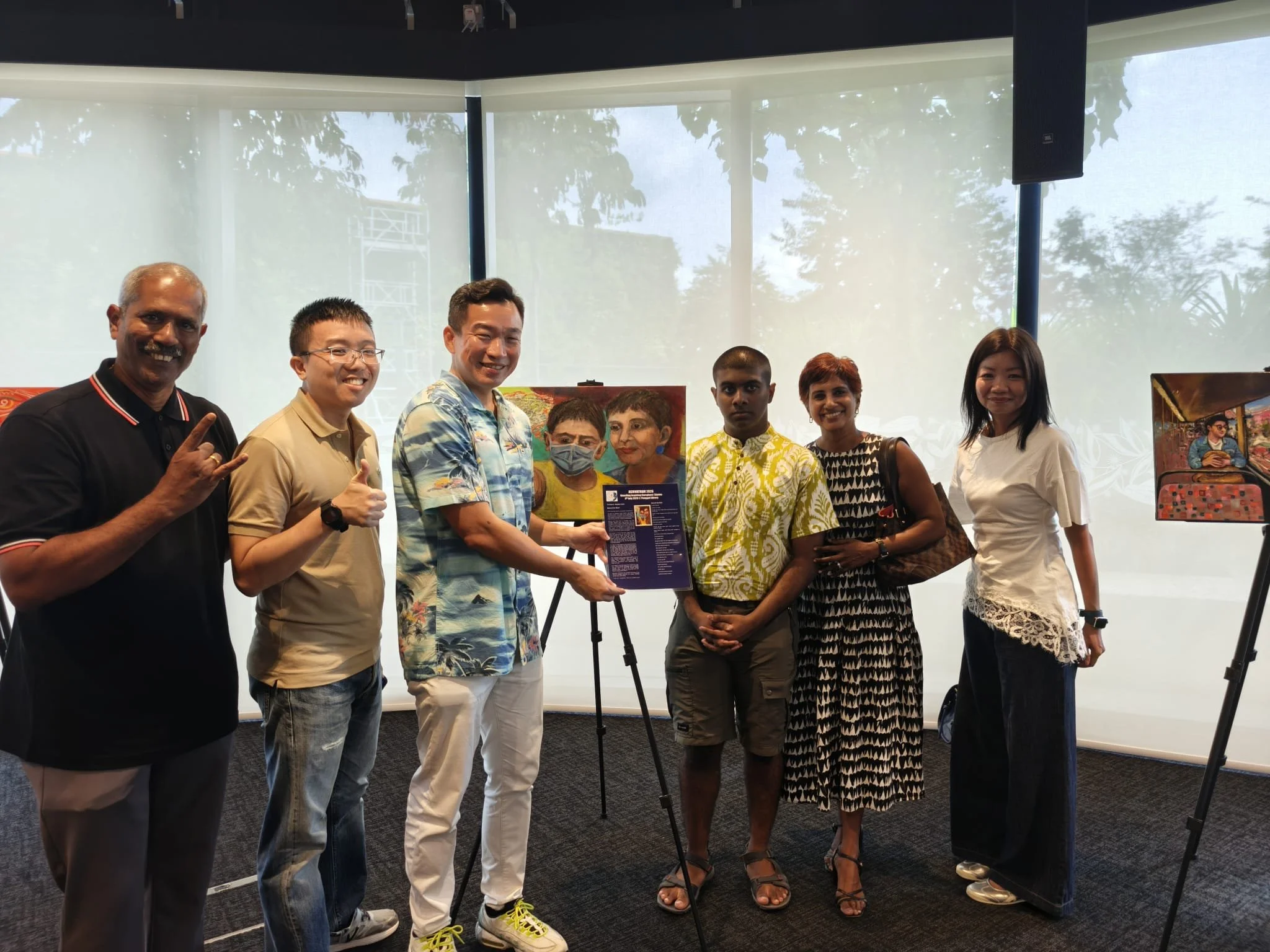
Behind the Mask
In this painting stands a young boy named Aarya.
To many, he appears quiet, distant, and hidden behind a mask. The mask is not something he wears because he wants to deceive the world. It is his shield. It protects him from a world that often feels too loud, too fast, and too overwhelming.
Behind that mask lives a beautiful soul with thoughts, dreams, fears, and emotions that are not always easy to express. While others may find comfort in conversations and crowds, Aarya finds comfort in the familiar glow of his phone. It is his safe space, his window to a world he can understand and control when everything else feels uncertain.
Beside him stands his mother.
Her journey is not an easy one. There are days when her heart aches as she watches her son retreat behind his mask. There are moments when she wishes she could take away his struggles, hear every thought he cannot put into words, and help the world see the extraordinary person she sees every day.
Yet she has learned something powerful.
The way to reach Aarya is not through pressure, correction, or judgment.
The way to reach him is through love. A love that is patient when progress is slow. A love that stays when communication is difficult. A love that sees beyond behaviours and into the heart of a child who is trying his best every single day.
She stands as his pillar of strength, quietly reminding him that he is safe, accepted, and enough exactly as he is.
This painting is not a story about autism. It is a story about unconditional love. It is about a mother who chooses understanding over frustration, acceptance over expectation, and hope over fear.
It is about a son who faces the world in his own way, carrying unseen challenges with remarkable courage.
And it is about the invisible thread between them, a bond so strong that even the thickest mask cannot hide it.
Because sometimes the greatest act of love is not trying to change someone.
It is simply standing beside them and saying,
"I see you. I accept you. I love you, exactly as you are."
Artist: Ying Wai Lin
Medium: Acrylic & Mixed Media on Canvas
Beneath My Mask
I talk to myself.
It helps me think.
It helps me stay steady when everything comes at me at once.
I wear a mask in public so my words can stay with me.
Not because I’m afraid,
but because some things are private
and some spaces are loud.
Crowds are hard.
People get too close and I don’t always know where to stand.
Rules about space and timing feel invisible to others,
but I have to work them out each time.
I like being alone.
It’s quieter there.
My phone helps me feel organised and calm.
It gives me something predictable to hold onto.
My mum stands beside me.
She doesn’t rush me.
She doesn’t ask me to be different.
She watches the room so I don’t have to.
When she’s there, I can breathe.
I can take my time.
I can be myself.
This isn’t a story about fixing me.
I don’t need fixing.
It’s a story about listening,
about space,
and about being accepted
without having to explain.
Caregiver: Karasi C
I never imagined that one day I would step away from my career to become a full-time caregiver for my older brother with special needs. It was not an easy decision, but family comes with love, responsibility, and sacrifice. Over time, caregiving became more than just helping with daily needs—it became a journey of patience, advocacy, and unconditional care.
Many people only see the surface, but behind closed doors there are countless unseen responsibilities. I have become his voice when he cannot express himself, his protector when the world feels overwhelming, and his companion through moments of uncertainty. There are difficult days, moments of exhaustion, and times when I feel invisible. Yet, there are also moments of joy, laughter, and deep connection that make the journey meaningful.
What has kept me going is the kindness of people around us. A stranger showing patience during a difficult moment in public, someone offering help without being asked, or simply choosing understanding instead of judgment—these moments matter more than people realize. They remind me that caregiving should never be carried alone.
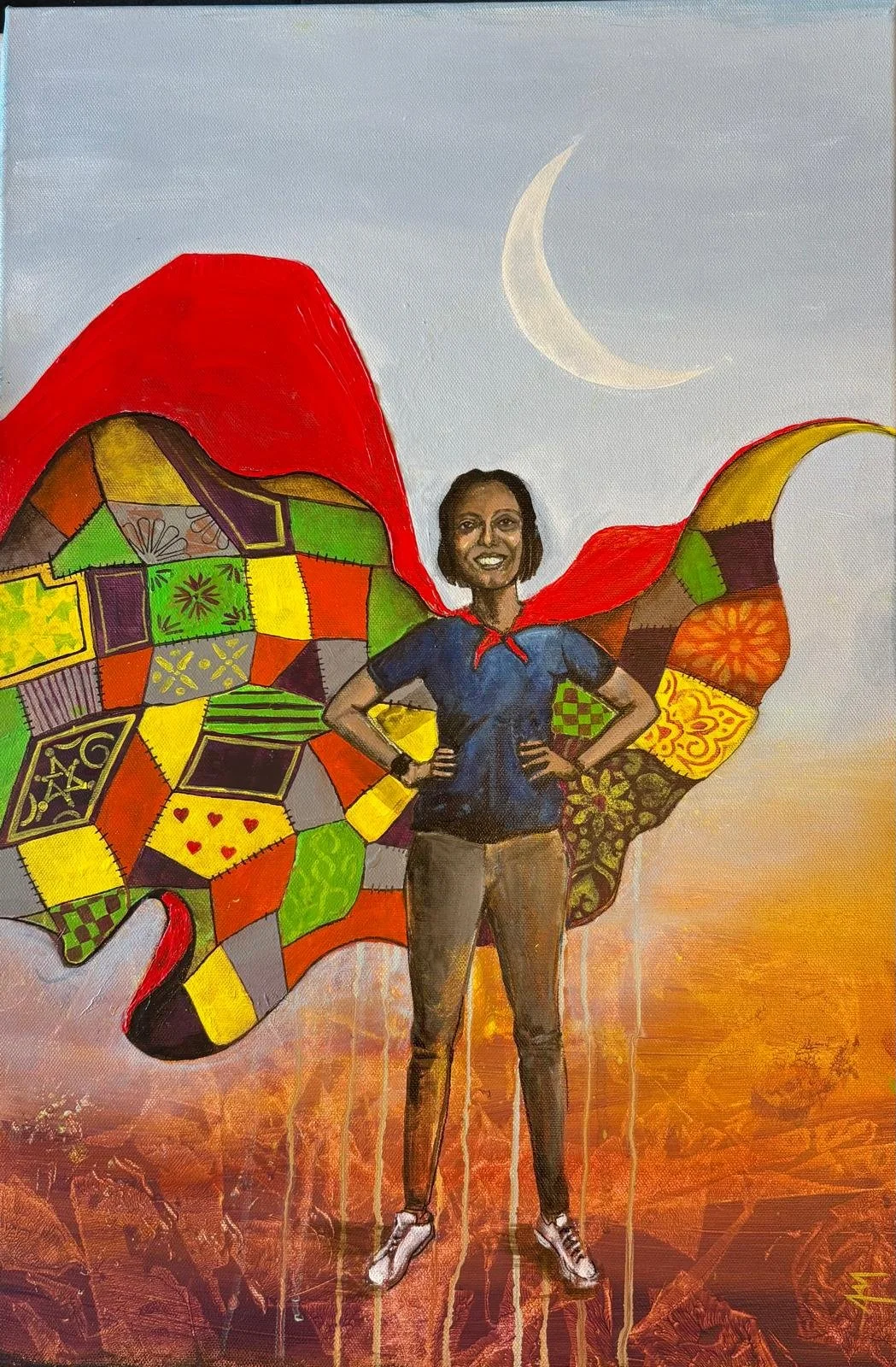
The patchwork cape in this artwork beautifully reflects how I see my journey. Every piece feels like a person or moment that helped me carry the weight a little more lightly. The bright colours remind me of my brother’s spirit—his joy, uniqueness, and the beauty he brings into our lives despite the challenges.
The crescent moon resonates deeply with me as a symbol of strength and grace. On days when I feel tired or uncertain, I hold on to the belief that there is hope, meaning, and strength beyond what I can see.
Thank you for telling a story that many caregivers silently live every day. This artwork is a reminder that we may carry heavy responsibilities, but with compassion and community, we do not carry them alone.
Artist: Anshu
It Takes a Community
She gave up her career to become the full-time caregiver for her older brother with special needs.
Every day, she carries responsibilities that most people never see. She has become his advocate, protector, companion, and constant source of support.
The patchwork cape represents the community around her. Each piece symbolizes a person, a gesture, or a moment of kindness. While caregivers are often seen as superheroes, they should never have to carry the weight alone.
Support does not always come in grand gestures. Sometimes it is patience when a child is overwhelmed in a public space. Sometimes it is offering a helping hand with a wheelchair. Sometimes it is understanding instead of judgment.
The bright colours within the cape are inspired by the joy, energy, and vibrant world of individuals with special needs. Together, they form a tapestry of collective care.
Above her hangs a crescent moon, a subtle reference to Lord Shiva. Often depicted with the crescent moon adorning his head, Shiva symbolizes compassion, strength, and the ability to carry immense responsibility with grace. The moon serves as a quiet reminder that even in moments of exhaustion and solitude, she is watched over and supported by a presence greater than herself.
This painting is a reminder that caregiving is not an individual responsibility—it is a community one. Every act of kindness, patience, and understanding becomes another patch in the cape, helping to lift the burden carried by those who care for others every day.
It takes a community to raise a child. It also takes a community to support the one doing the raising.
Caregiver: Logan
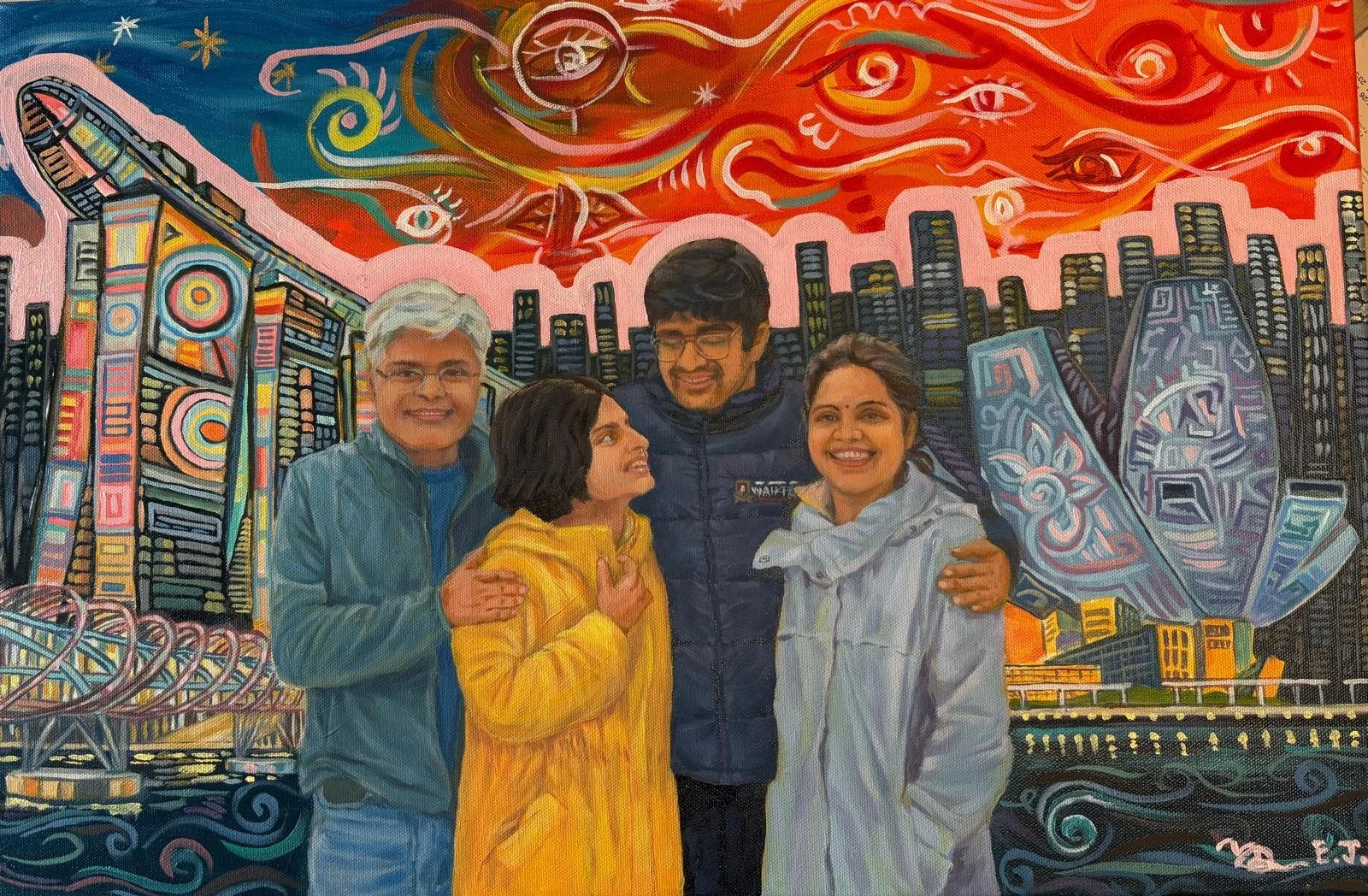
Being part of a happy family is a blessing, but being part of a special family is truly a divine blessing. Our daughter has brought meaning, purpose, and a unique sense of fulfillment to our lives. Through her, we have discovered countless reasons to smile, grow, and cherish every moment together.
Life is not about fixing what is not broken. Instead, it is about embracing each day with love and finding joy in the little moments that make our journey meaningful.
We choose to celebrate life as it is, embracing every experience and finding joy in every moment. For us, family is not just a part of life but it is what makes life complete.
Artist: EJ Kim EC
Medium: Oil Paint
Within Their Arms
This painting captures a family raising a daughter with special needs in Singapore — a vibrant yet rule-bound city. The bold red at the top represents society's judgements and unspoken pressures, while the lower portion reflects the family's colourful everyday reality. Here, a father, mother, and brother stand as her unwavering shelter, and within their love, she finds safety and belonging.
The soft pink boundary between the two worlds reminds us that life's challenges and its beautiful moments of connection coexist — and that love, quiet and steady, is what carries a family through.
Caregiver: Debjani
My journey as a mother to a special needs son has been one of continuous learning and quiet transformation. When my son was around thirteen years old, he began exhibiting significant behavioral challenges. I often felt overwhelmed and unsure, searching for ways to understand and support him while navigating my own fears and frustrations.
A turning point came when I discovered the Son-Rise Program. I attended their sessions in Singapore and immersed myself in the books by the Kaufman family. This experience reshaped not just my parenting approach, but my way of seeing my son—and, in many ways, the world. I began to understand that just because he could not always express himself verbally did not mean he had nothing to communicate. His cues were present in small gestures, in silence, in patterns that required patience and attention to truly see.
I gradually embraced a more inclusive and accepting approach, grounded in praise, laughter, and unconditional love. In doing so, I noticed something unexpected: as I became more attuned to him, I was also changing. I grew more compassionate, more empathetic—not only toward my son, but toward others whose struggles are not immediately visible. I learned to listen more deeply, to withhold judgment, and to meet differences with curiosity rather than resistance.
While my son continues to have significant needs, he is happier and more at ease. And as a family, we have grown alongside him. This journey has not been easy, but it has been deeply meaningful—shaping not just the mother I am, but the person I hope to become.
Artist: SARBANI
Medium: Acrylic on Canvas
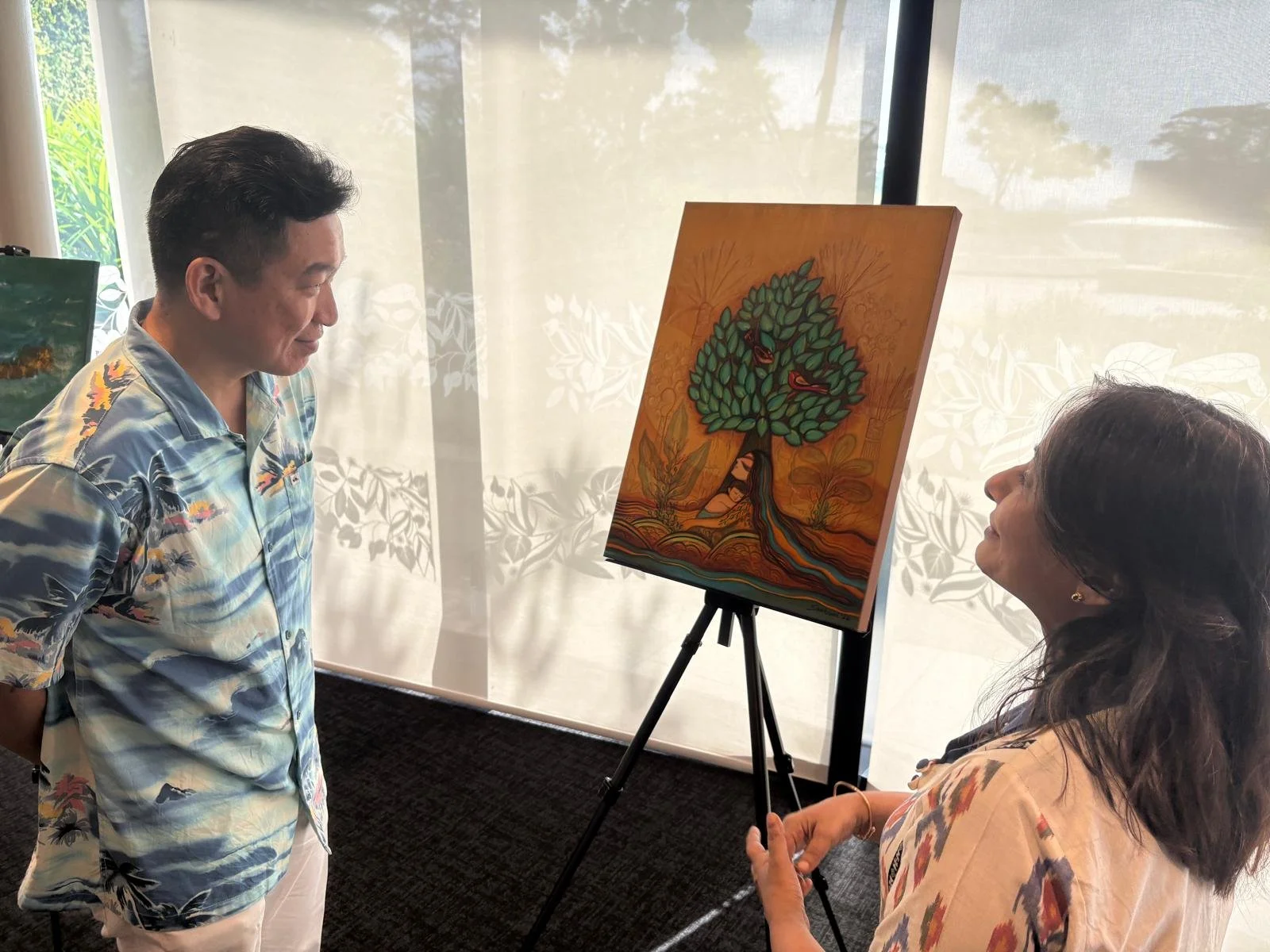
The Soul of the Mothering Tree-26
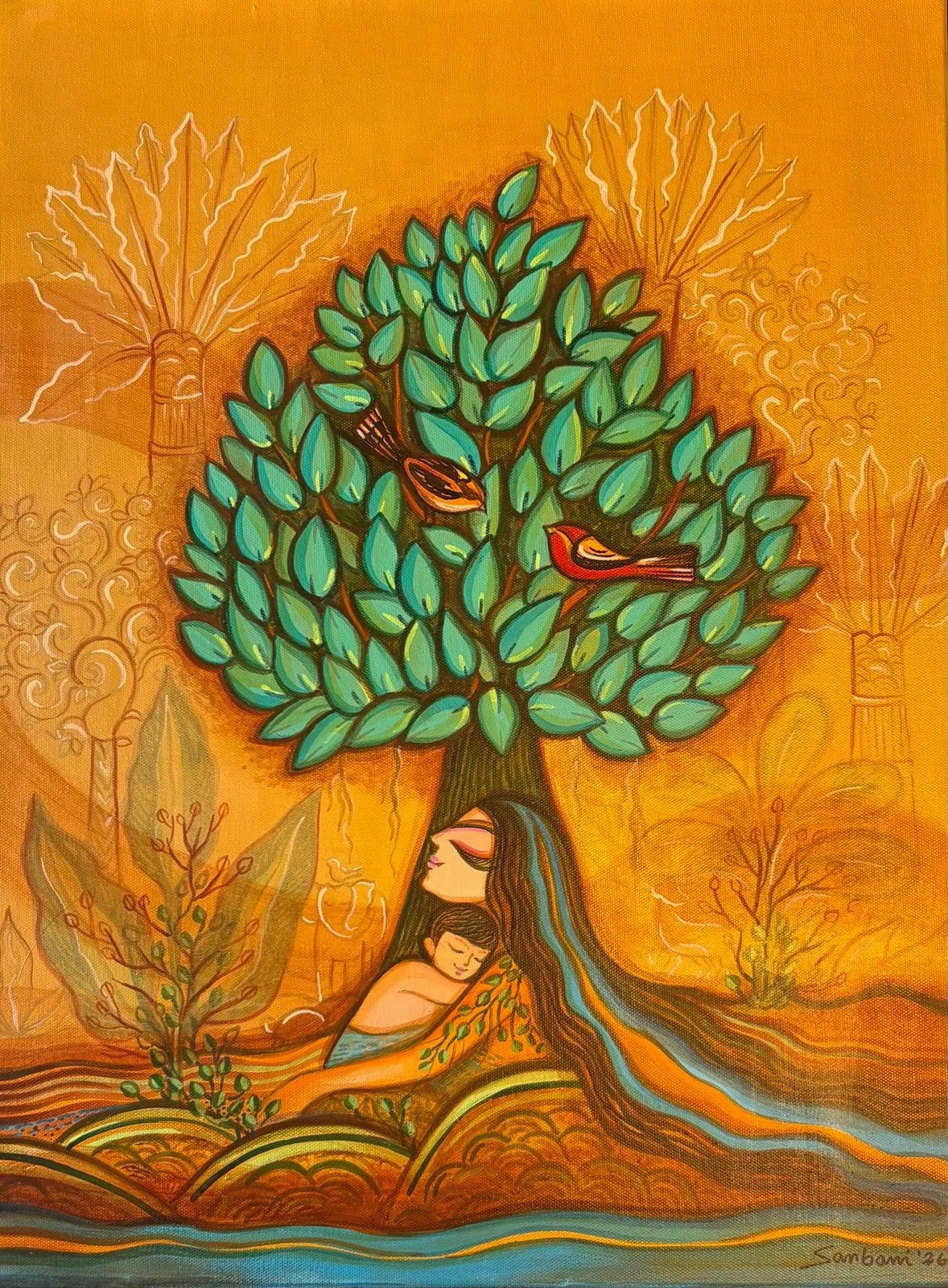
This painting was inspired by the journey of Debjani, a mother raising her special-needs son. She shared how the early years were marked by uncertainty, and challenge of accepting a life that looked different from what she had imagined. Yet, through acceptance, her heart gradually opened to a deeper compassion—not only for her son but for herself and others around her.
In this artwork, the mother and child are embraced within the Tree of Life, their forms merging into its sturdy trunk, symbolizing an unbreakable bond rooted in love, resilience, and growth culminating in eternal peace. As acceptance blossomed, so did their lives. The child, nurtured in this atmosphere of unconditional love, began to flourish in his own unique way.
The emerald-green leaves represent renewal, healing, and the abundance that emerges when life is embraced as it is. The birds cooing among the branches symbolize freedom, hope, and the gentle songs of joy that return when the heart finds peace.
The mother’s flowing hair becomes a river of Mother Earth’s nurturing love, carrying tenderness, patience, and strength through every season of life. The golden background reflects the sacred light of awareness, while the subtle trees in the distance remind us that every life is interconnected, each journey supporting and enriching another.
This painting is a celebration of a profound truth: acceptance is not surrendering to circumstances; it is opening the heart wide enough for love to transform them. In that space of compassion and empathy, both mother and child blossom, rooted in peace and reaching toward the light.
When acceptance takes root, love blossoms into a tree large enough to shelter every challenge and every dream
Caregiver: Vijaya
Raising a child with "invisible" disabilities while navigating the world as a single parent is an incredibly heavy mantle to carry. Harish lives with a speech and language delay and a mild intellectual disability. Because his disability isn't "visible," it can be easy to misunderstand his behavior. When he has a temper outburst or struggles in public, it isn't because he is being "difficult" or "naughty." It is his way of coping when the world feels overwhelming or when he can’t find the words to tell what he needs.When a disability isn't visible, people often mistake a struggle for a choice. They see a temper outburst or a public "scene" and label it as a lack of discipline rather than what it actually is: a communication breakdown. If there is one thing I wish I could tell those around me, it’s this: Acceptance is not a gift you give to a child with a disability; it is a basic human right. Try to see the world through his eyes. It means more to me than I can say.
Artist: Frederick Wong
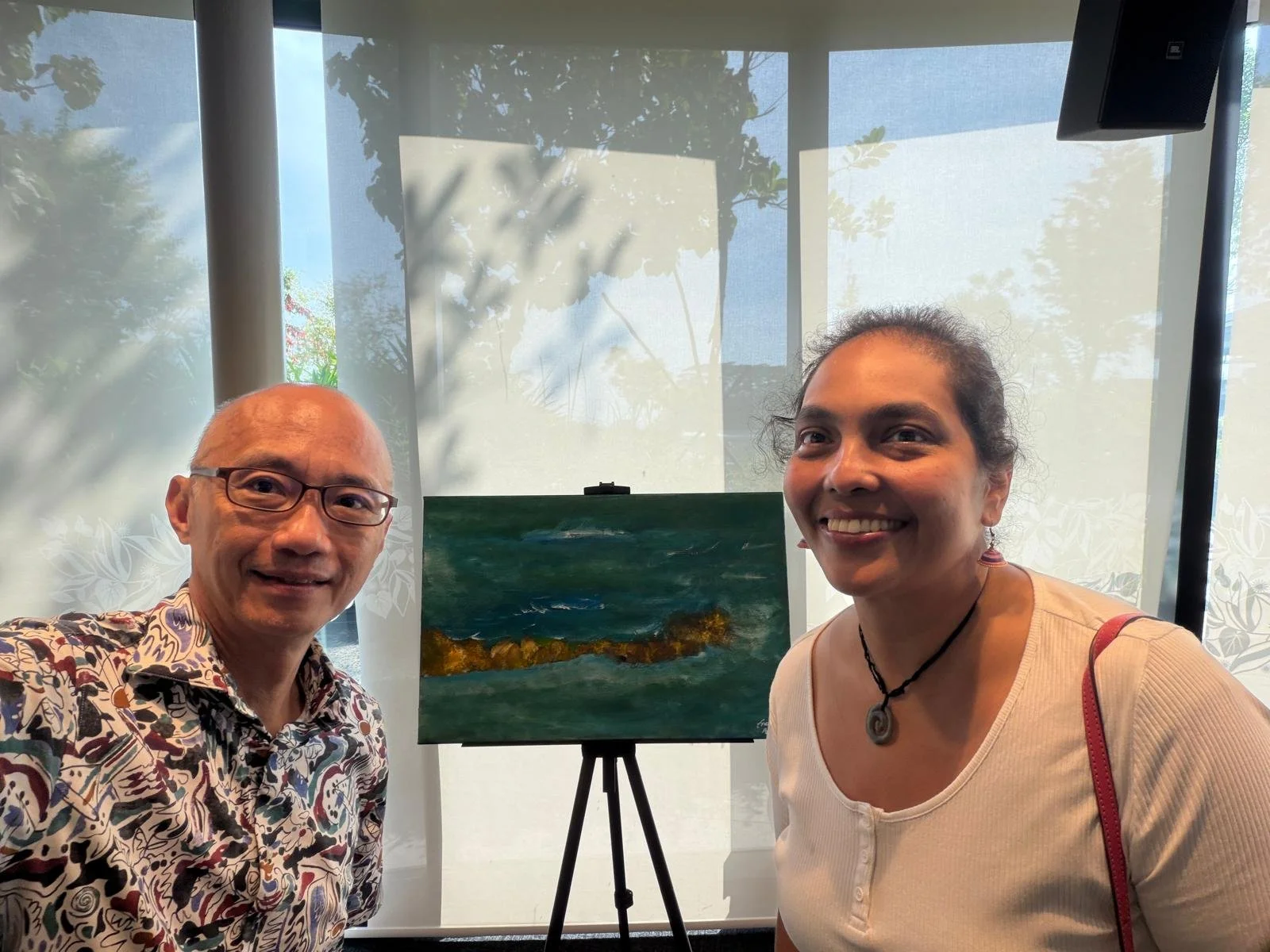
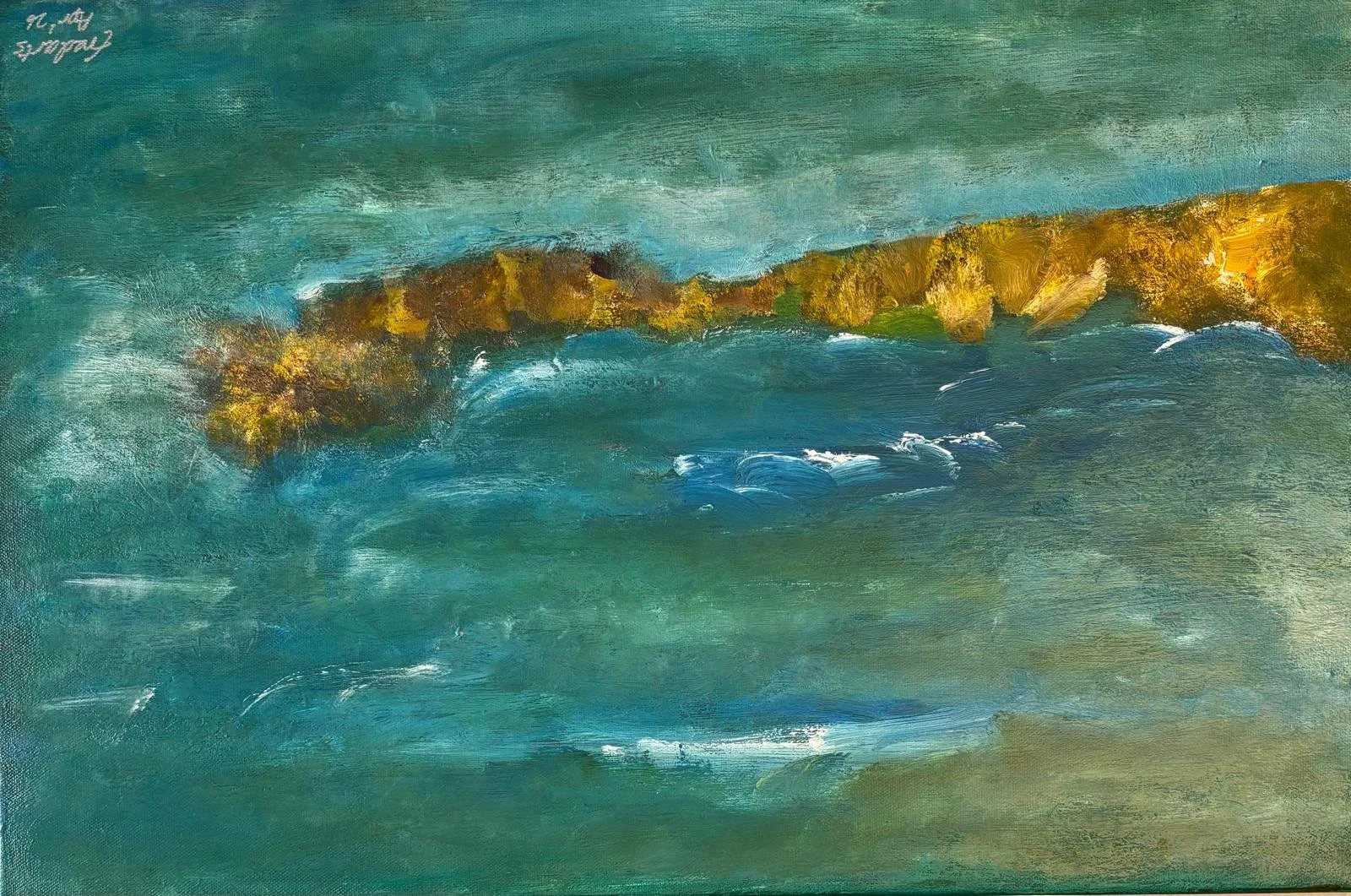
Two deep bands of blue frame the canvas, capturing the dual reality of a single mother: one side is the heavy sapphire of exhaustion, the other a fierce, protective cerulean sky.
Cutting through the center is a dense bed of rocks. This cluster is her community—the therapists, friends, and family wedged tightly together, absorbing the pressure so she doesn’t break.
Thick patches of brilliant white break through the radiants of blue. These are the quiet victories and sensory breakthroughs, a tangible reminder that hope and resilience will always outshine the weight of the journey.
Caregiver: Gayathri
Kavitha Takes Flight
It was our first holiday since Appa passed, and that alone felt like a lot. But what kept me up the night before was not the grief. It was Kavitha. She’s my younger sister, and crowds and confusing places are really hard for her. When she gets overwhelmed she shouts, she screams. I kept thinking about the airport, the queues, all those strangers. I kept thinking about what people would think.
Then she just handled it. The flights, the terminals, the busy streets of Bali. She took it all in her stride. At one temple she slipped and hurt her leg. She cried and screamed, and my heart sank. But within minutes she had calmed down and was walking again, no more fuss.
By the end we were just a family on holiday, laughing and eating and enjoying ourselves. She didn’t need me to protect her from the trip.
She just needed to be brought along.
Artist: Bhagya Rao
Medium: Acrylic on Canvas
Peace
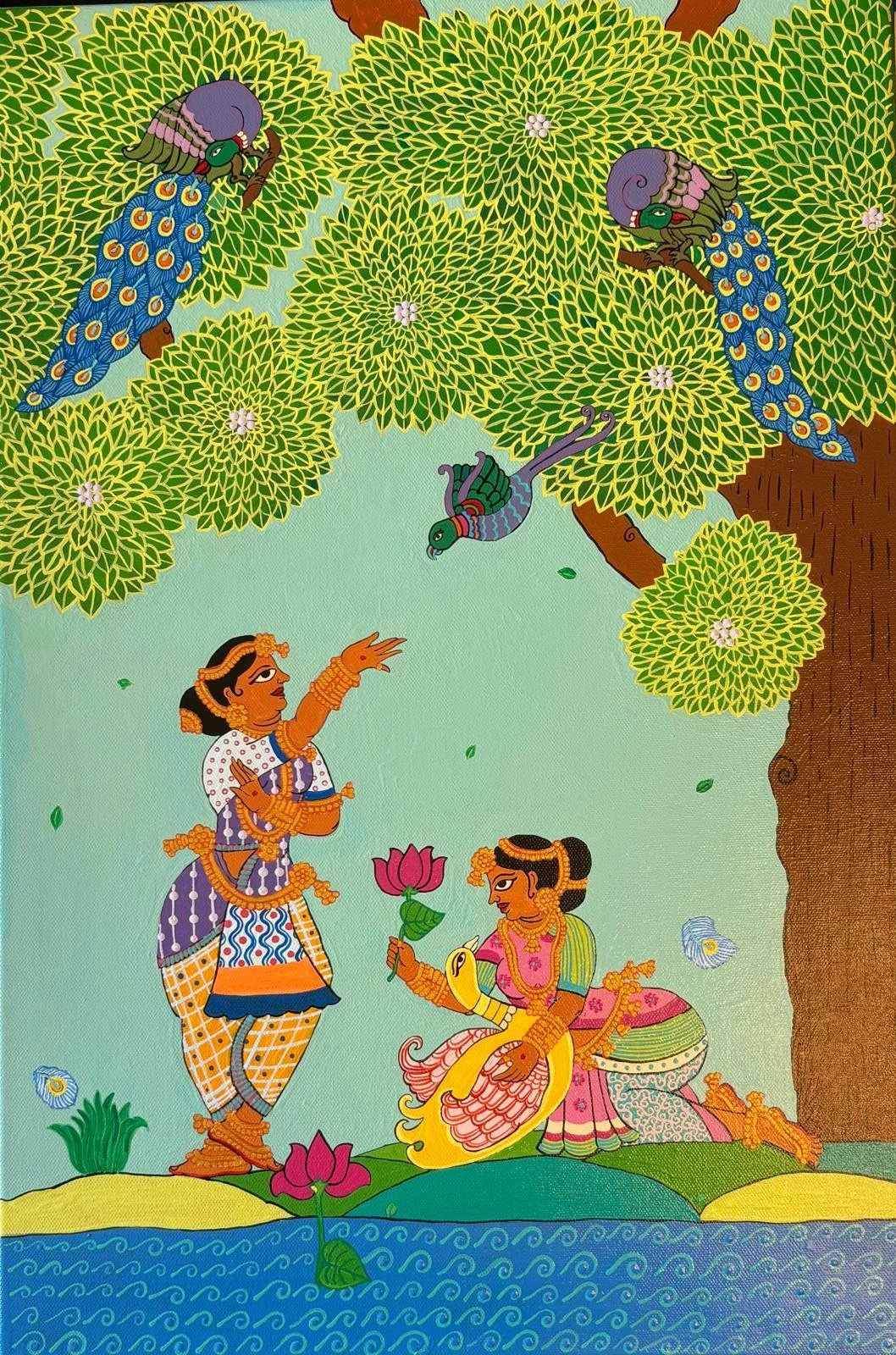
This painting captures two sisters quietly enjoying a fleeting moment of life within a beautiful landscape. Beneath this stillness, there is a deeper hidden narrative of care, patience, and quiet sacrifice.
Loving and supporting a sibling on the spectrum carries unspoken challenges, moments of frustration, and emotional strain. Yet here in this moment they dissolve into a sense of peace and gentle connection.
Inspired by a shared holiday in Bali, the work reflects a rare pause where being in the present is everything. It reminds us that life is not defined solely by struggle, but by these brief, luminous moments of joy where love exists freely and without restraint.
The artist wants to remind us with this painting that ultimately life is these moments of connections , in the present and in memories.
Caregiver: Ranjini
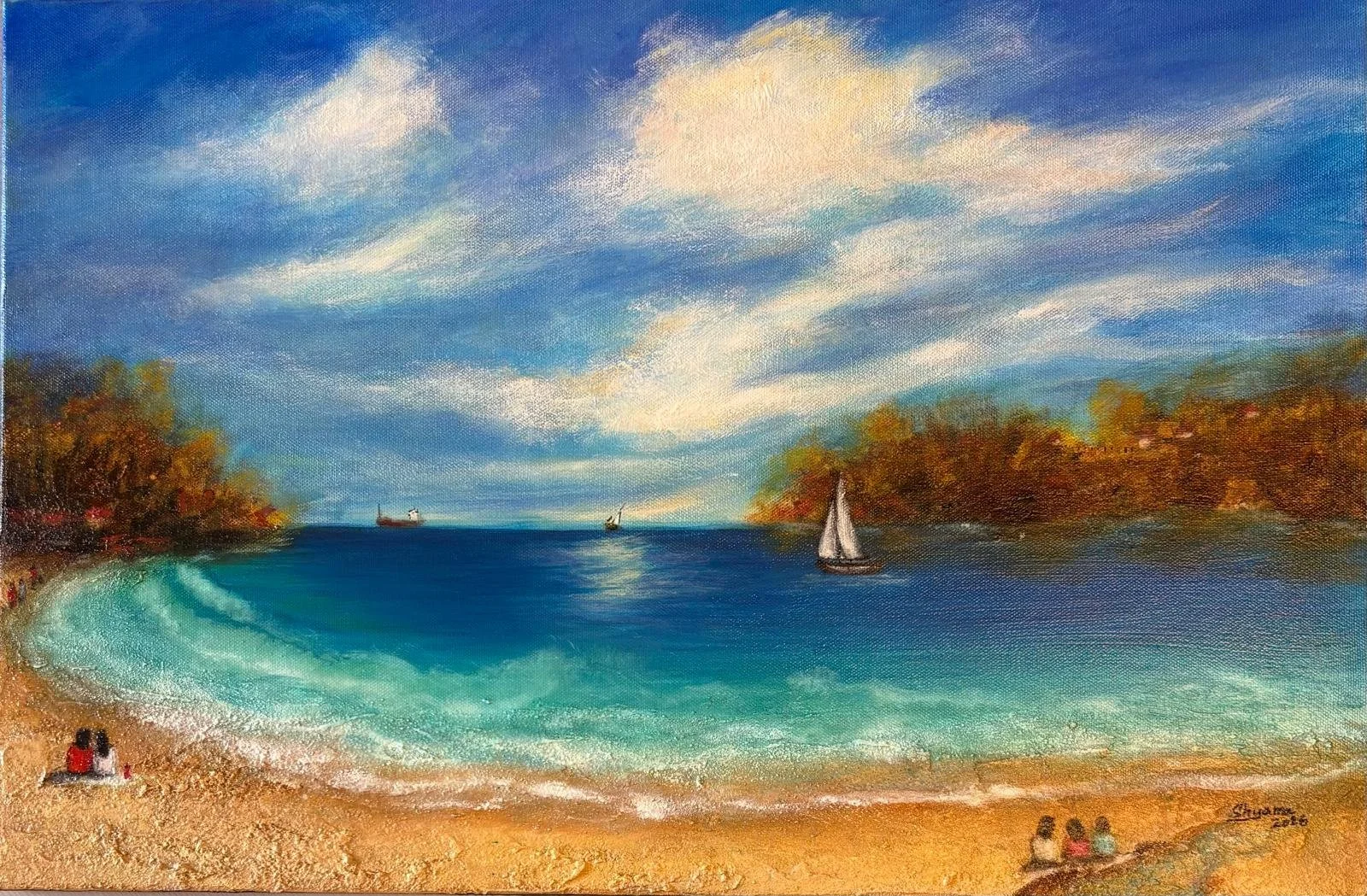
Early years were nothing like a calm beach. Kavitha, my daughter whom I love fiercely, but the world had no patience for her. People would watch her flap her hands, pace up and down, and they would whisper. Some said it to my face that my daughter was crazy. Each word landed like a stone. I would go home and carry that sadness and carry on.
For ten years I lived like that. Absorbing the comments. Parking aside my sadness because she needed me present, not broken. But children have a way of rewriting the stories people tell about them.
Slowly, with time, with the help of wonderful people who actually took the time to understand her, Kavitha grew. She surprised me in ways I had stopped letting myself hope for. She keeps the house tidy without being asked. She helps me in the kitchen. She moves through her days with a quiet pride that fills my heart.
I think of a beach sometimes. The early years were the rough water unpredictable, exhausting, pulling me under when I was not ready. But you don’t stay in the rough water forever. Gradually you find yourself closer to shore. The waves still come, but gentler now. I have learned to brace these waves strongly.
Artist: Shyama
“For a caregiver, the world can often feel loud, complex, and overwhelming. Yet, in talking with a mother devoted to her adult autistic daughter, the moments that shone the brightest were beautifully simple: organizing familiar spaces, cooking, and walking hand-in-hand along the shore.
I painted this scene to be a vibrant gateway back to those happy memories. My wish is for the family to look at this canvas and instantly feel the warmth, breeze, and joy of their beach walks. While I added the boats on the water to capture the gentle movement and flow of life continuing around them, the shoreline itself is meant to be a peaceful sanctuary where they can rest and look out at the world.
To honor the beautiful support system surrounding the daughter, I intentionally designed the figures on the canvas to invite a shifting perspective. On the left, I placed two figures sitting closely in a quiet moment of grounding—a reflection of the intimate bond between the mother and her daughter. On the right, I painted a trio, mirroring the times both sisters and their mother share the coast. By weaving these dual perspectives into the textured landscape, my artwork stands as a joyful celebration of the caregiver’s heart: a sunlit reminder of the safe, serene havens they build together, hand-in-hand."
Caregiver: Weng Ho
Walking the Path with Ethan
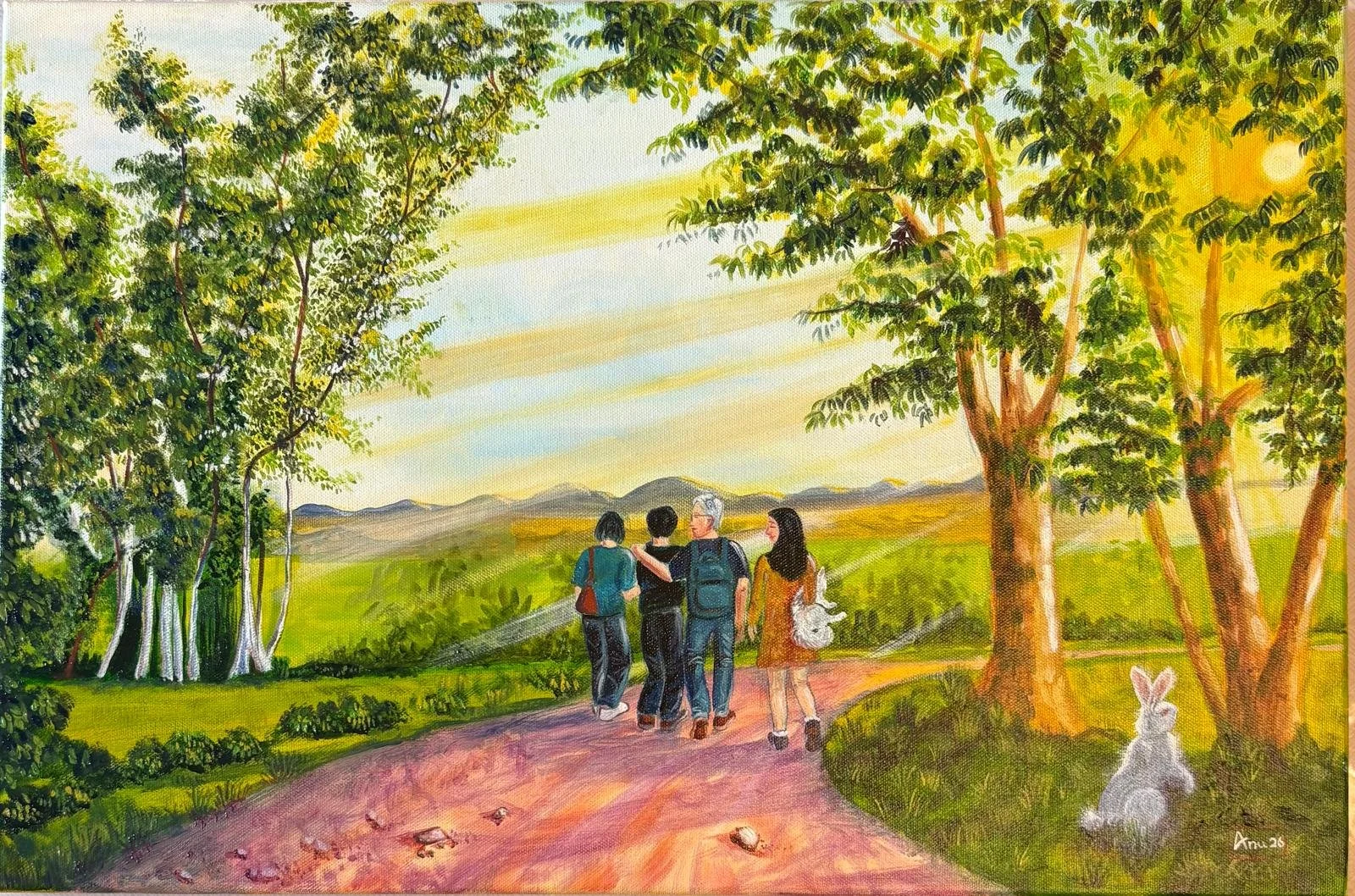
Whenever I think about parenting Ethan, one image always comes to mind — a family of four walking hand in hand on a slightly uphill path, surrounded by nature, moving toward the morning sun. Occasionally, a little grey rabbit hops across our path, quietly reminding us that hope exists even during difficult times. That image reflects our journey with Ethan.
Ethan, my firstborn son, was diagnosed with moderate to severe autism at 30 months old and dyslexia at 13. We were once told by doctors to forget about his future because he had none. Those words were heartbreaking, but we refused to let them define Ethan’s story.
Today, Ethan is almost 28 years old. After a longer and unconventional academic journey, he graduated with a Diploma in Interior Design and now works as an Architectural Drafter, contributing meaningfully to society.
Looking back, our journey was guided by a few important principles: entering Ethan’s world through his interests, setting realistic milestones, maintaining consistency, using visual learning, breaking tasks into smaller steps, and embracing patience through repetition.
Our journey was never about “fixing” autism. It was about understanding Ethan, adapting ourselves, and believing in possibilities when others could not. One step at a time, we continue walking forward with hope.
Artist: Anu Karikala
Mr. Weng Ho, 63, is a retired man whose life reflects strength, sacrifice, and unconditional love. For more than 20 years, he devoted himself to caring for his special needs child, showing that true success comes through patience, dedication, and family unity.
Alongside his wife, he made difficult choices and shared responsibilities to give their child the best chance at an independent life.
Through this painting, Mr. Weng Ho wishes to share an important social message: caring for a family member is not the duty of one person alone— parents and families must stand together, support one another, and face challenges with love, resilience, and hope.
Caregiver: Balaji
The Silent Passenger
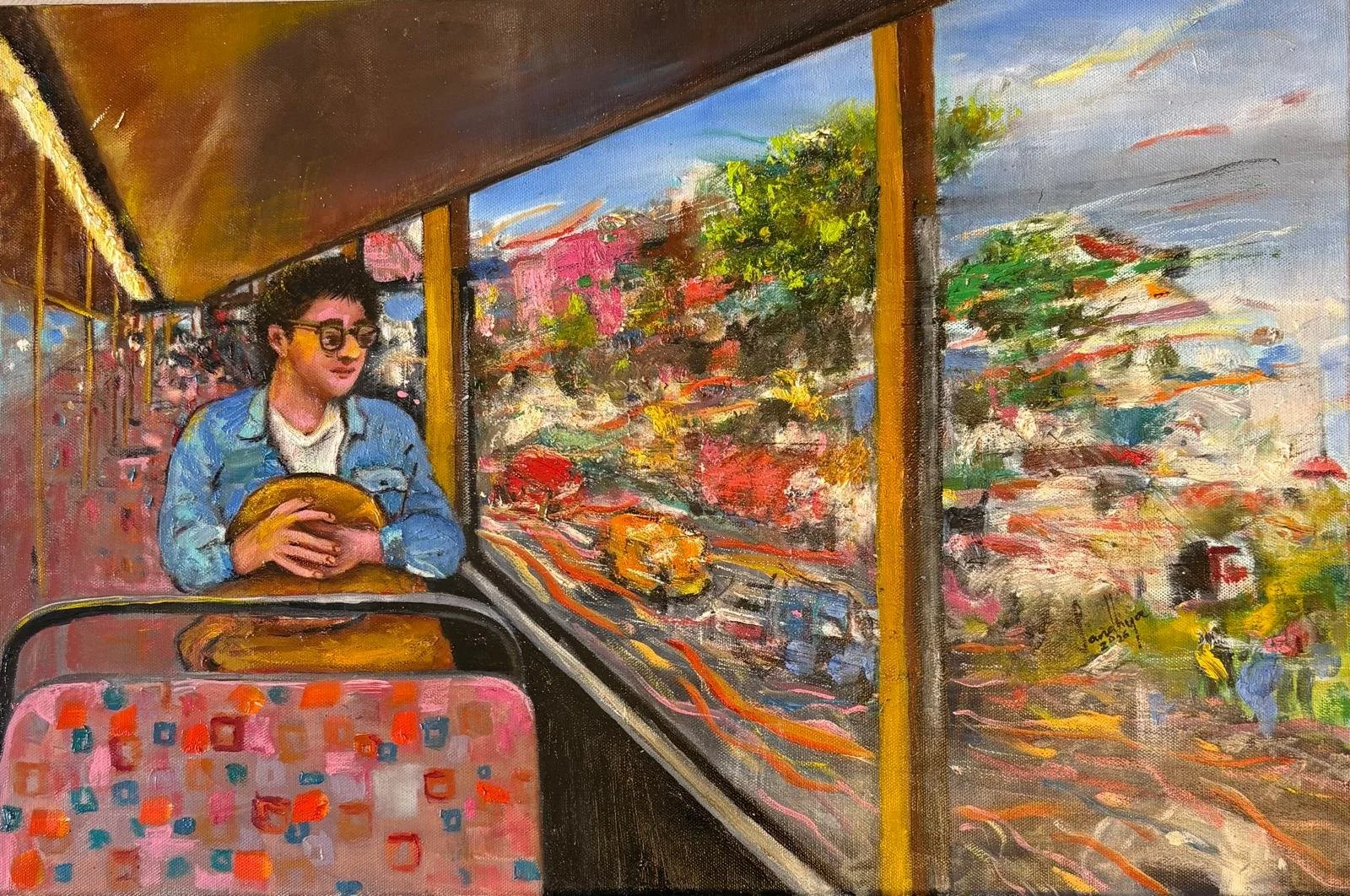
For many, taking a bus is an ordinary part of life. For our son, it represents freedom, independence, and joy.
Since young, bus rides have brought him peace and happiness. Sitting by the window and watching the world go by gives him a sense of calm and comfort.
Because of his condition, he sometimes forgets how to travel independently and needs to relearn the route. Each time, we patiently guide him again — teaching him where to board, when to alight, and how to recognise familiar landmarks. We quietly sit behind him, ensuring his safety while allowing him to build confidence.
Every time he rides independently, it is a meaningful victory for our family. What may seem like a simple journey to others is a powerful reminder of resilience, patience, and the joy of finding one’s own way.
Artist: SandHya
Medium: Oil on Canvas
The Silent Passenger
This painting captures a special place of freedom and happiness. It shows a young man riding a bus, which is a place where he feels completely peaceful and independent. In the artwork, the world outside the window is a bright blur of fast-moving colors, but the boy sits quietly, holding onto his seat with a calm smile.
There is also a moving story of family love behind this scene. Every few years, the boy forgets how to take the bus, and his parents patiently teach him the route all over again. They sit behind him to make sure he stays safe until he can ride on his own. Through its bright colors and meaningful story, this painting celebrates the joy of finding your own way in the world.
Caregiver: Rajendran K S
A Haircut, A Lesson, and A Call for Understanding
My story is about something many families may consider simple — getting a haircut. But for my son and my family, it became a journey of understanding, patience, and resilience.
My son was only about three years old when we decided it was time for his haircut. Like any parent, we brought him to a hair salon, expecting a routine experience. Instead, it turned into a heartbreaking disaster.
The moment the barber started, my son screamed uncontrollably, grabbed the hair trimmer, threw it to the floor, and chaos unfolded around us. People stared. The barber looked shocked. We apologised profusely and left the salon feeling deeply embarrassed and defeated.
On the way home, I kept asking myself: What went wrong?
I realised that I had made a mistake — I had not prepared my son for the experience.
Determined to help him succeed, I spent nearly a month preparing him for another attempt at a haircut. I role-played haircut sessions at home, gently introducing him to the process. I even brought him to a salon to watch me get a haircut, hoping familiarity would reduce his anxiety.
Finally, the big day arrived.
With hope and confidence, I proudly brought my son to another salon, since the first salon's owner had firmly told us not to return again.
Everything seemed perfect. My son sat calmly on the chair. The barber carefully placed the cutting cape around him. My son was smiling, and for a moment, I felt hopeful. I thought to myself, This time, we have made it.
Then came the unexpected.
The barber switched on the hair trimmer and moved it near my son’s ear.
Within seconds, the trimmer was on the floor, the barber had jumped back nearly a metre, and I felt something hit my face. Above all, there was my son’s piercing scream — one filled with fear and distress.
Once again, we apologised and quietly walked away while curious onlookers whispered and stared. Once again, we left feeling helpless.
For days, I replayed the moment in my mind, wondering what had gone wrong despite all our preparation.
Then it finally dawned on me.
My son is autistic and highly sensitive to sound.
What seemed like a soft buzzing noise to most people was painfully overwhelming to him. Because of his sensory sensitivity, even small sounds could feel intensely amplified. The trimmer was not simply noisy to him — it was unbearable.
Armed with this understanding, we tried again.
This time, we brought along earmuffs to reduce the sound. And for the very first time, my son had a peaceful, happy haircut experience.
That moment taught me an important lesson: behaviours we often see as “difficult” are sometimes expressions of fear, discomfort, or sensory overload.
Children with autism often experience challenges with sounds, food textures, smells, lights, and crowded spaces in ways that neurotypical children may not. Because of this, what appears to be a simple outing — a trip to the salon, swimming pool, shopping centre, or supermarket — can become an overwhelming and daunting experience for both the child and the caregiver.
So, I make this heartfelt appeal to everyone:
When you see a child having a meltdown in public, please pause before judging. Instead of staring or making comments, choose understanding. Show kindness. Offer patience. Extend empathy to the caregivers who are trying their best to comfort and support their child.
Together, we can build a kinder, safer, and more inclusive world — one where every child and every family, regardless of their challenges or limitations, feels accepted, understood, and valued.
ARTIST: GUNASUNTHARI T
Empathy Uplifted
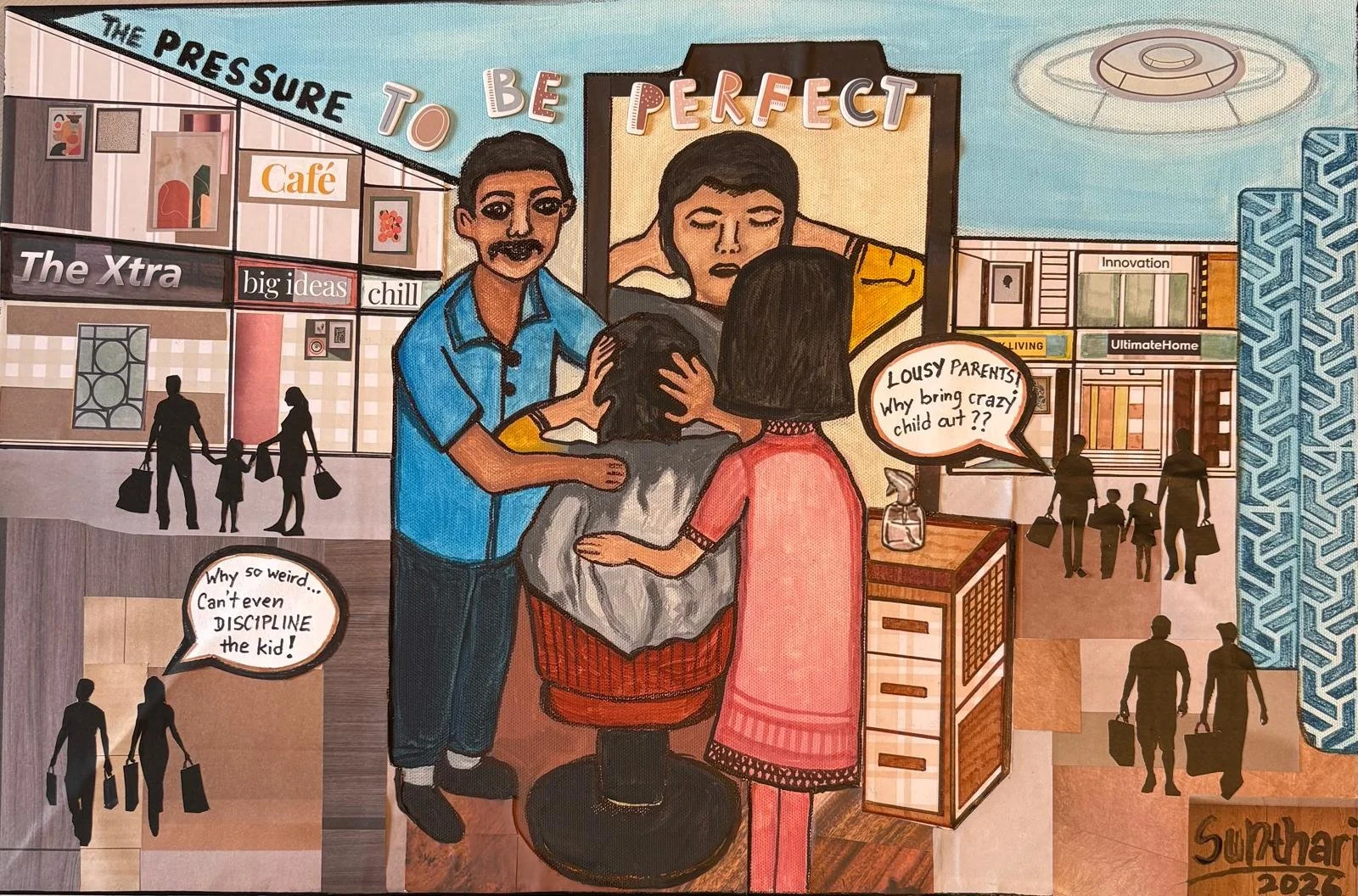
This mixed media collage explores the unseen struggles of a young autistic boy, navigating a world that often overwhelms his senses. Living with hyperacusis, everyday environments – like the sharp buzz of an electric hair clipper in a hair salon or the chaotic noise of a crowded mall – become intensely distressing, triggering meltdowns that are frequently misunderstood by others.
At its core, this work not only captures the child’s experience, but also the emotional weight carried by his parents. Their constant vigilance, patience and exhaustion are juxtaposed against the judgement of onlookers who misinterpret the boy’s distress as misbehaviour and insanity rather than a genuine sensory crisis. In addition, this heartwarming work invites viewers to confront their assumptions and consider the invisible challenges that many families silently endure.
Through layered textures, contrasting tones, and fragmented composition, that is hardly seamless, this uplifting piece reflects the boy’s sensory overload while simultaneously conveying the isolation felt by both child and parents. It is a call for empathy – a reminder that what may appear as chaos on the surface often holds a deeper story of resilience, love and misunderstood struggle.
When Caregivers and Artists Connect
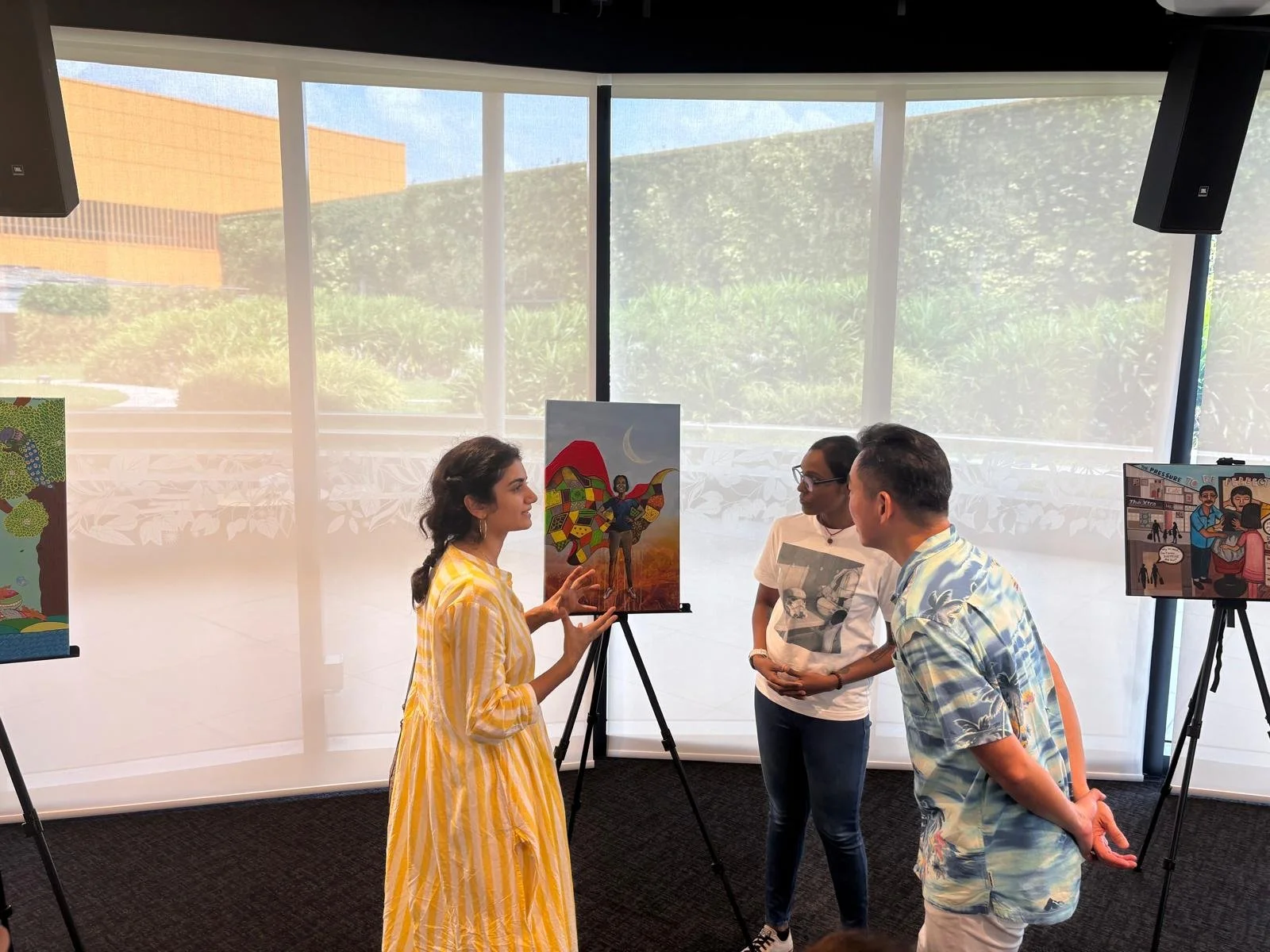
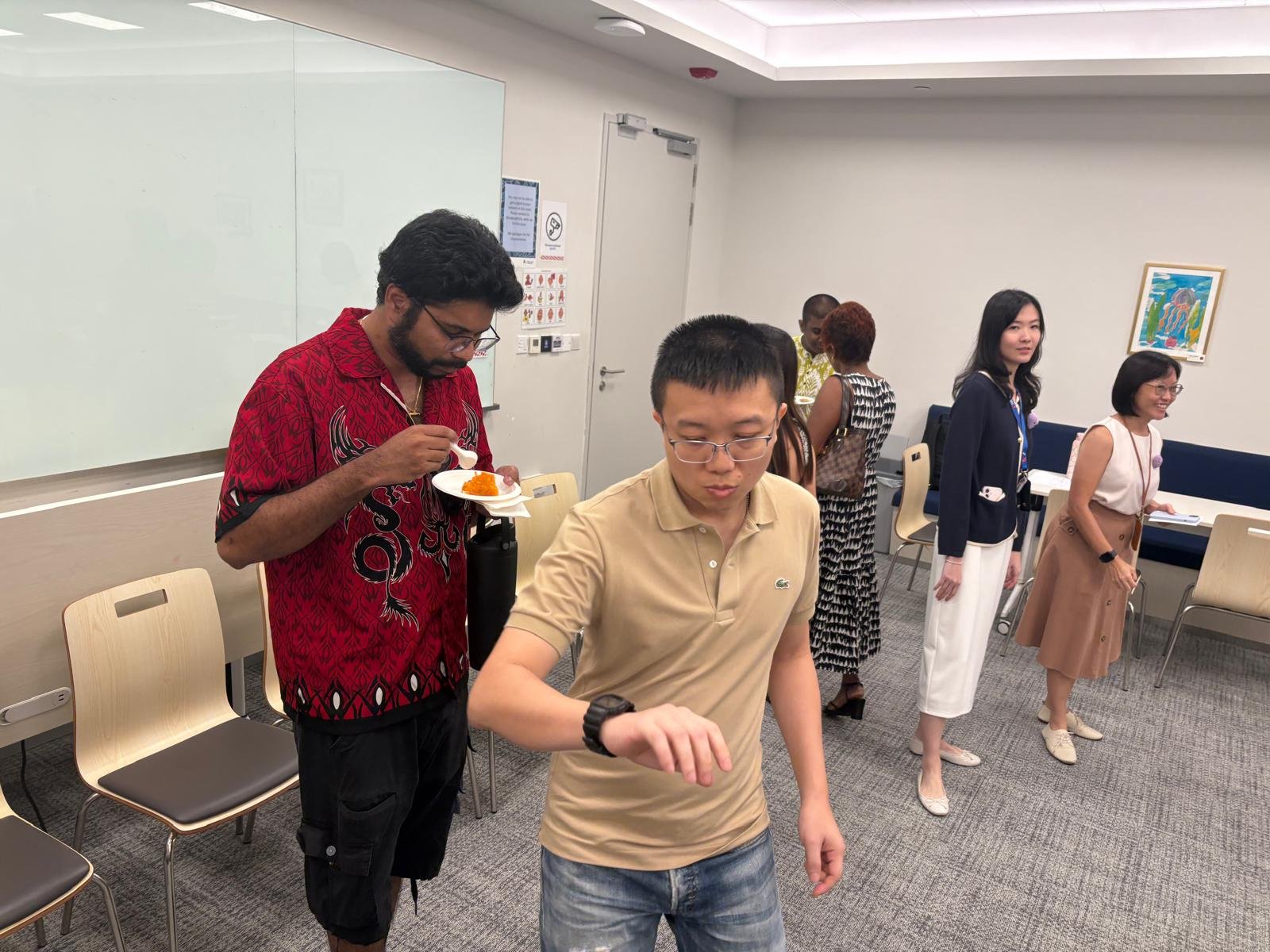
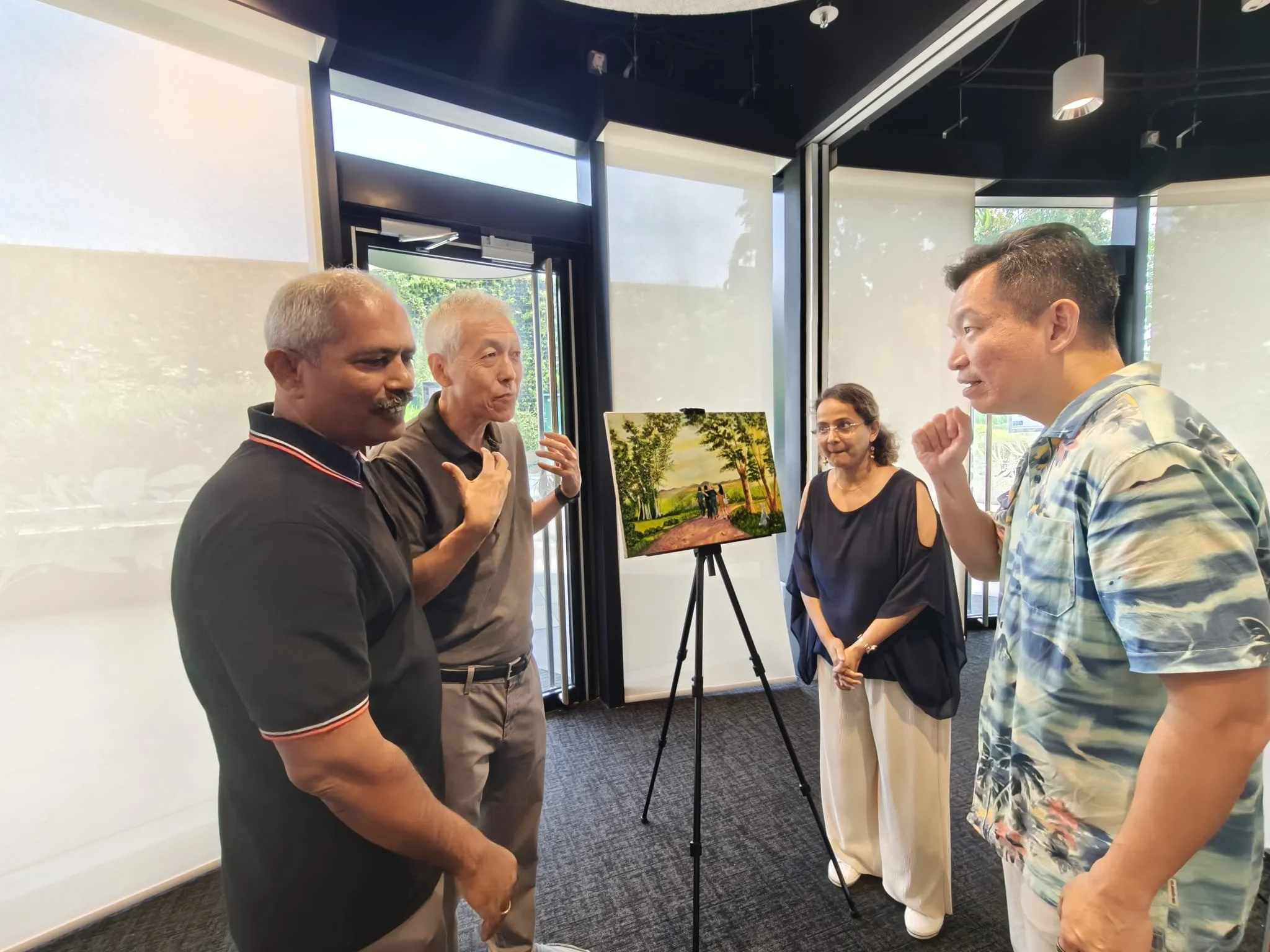
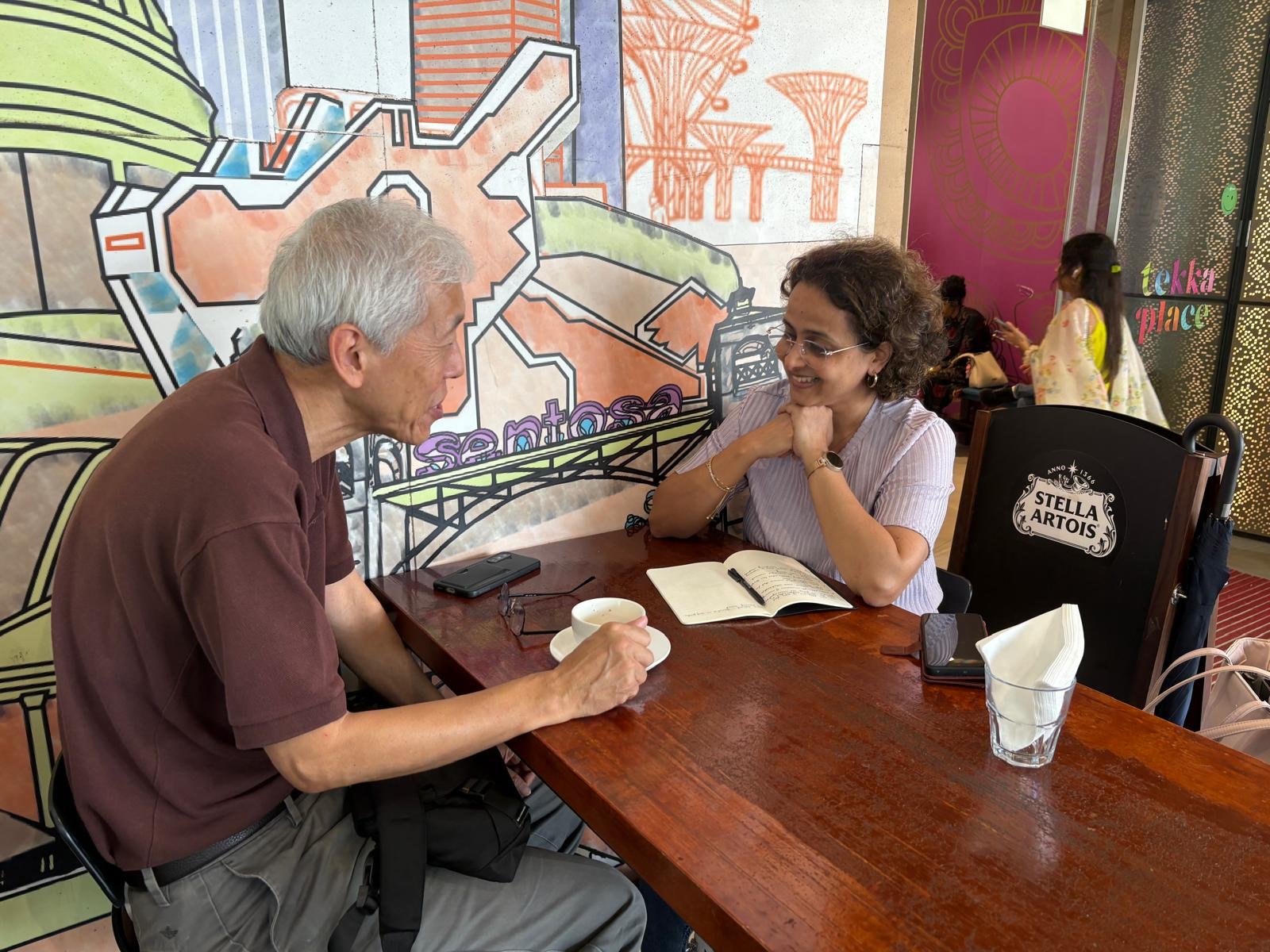
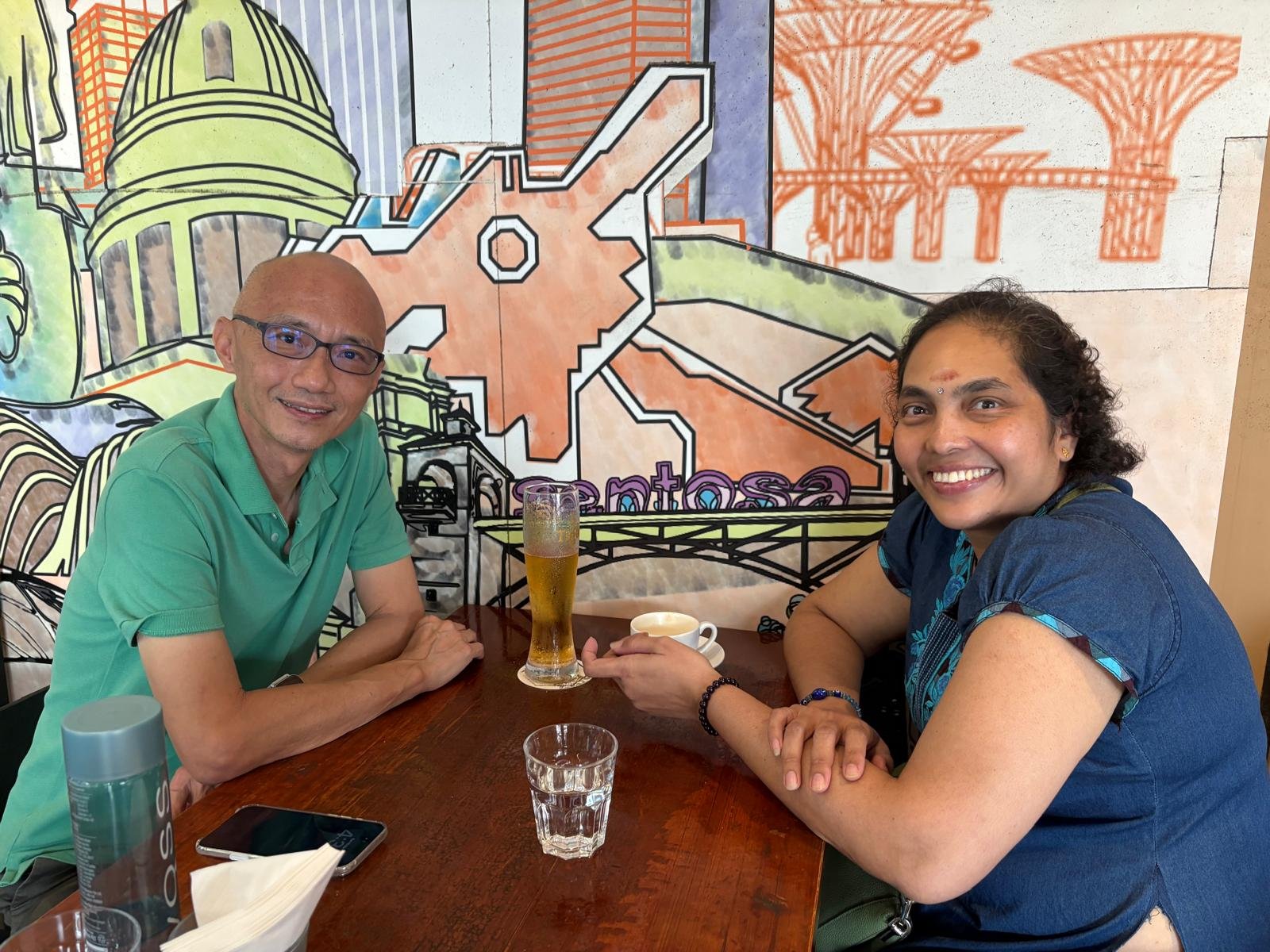
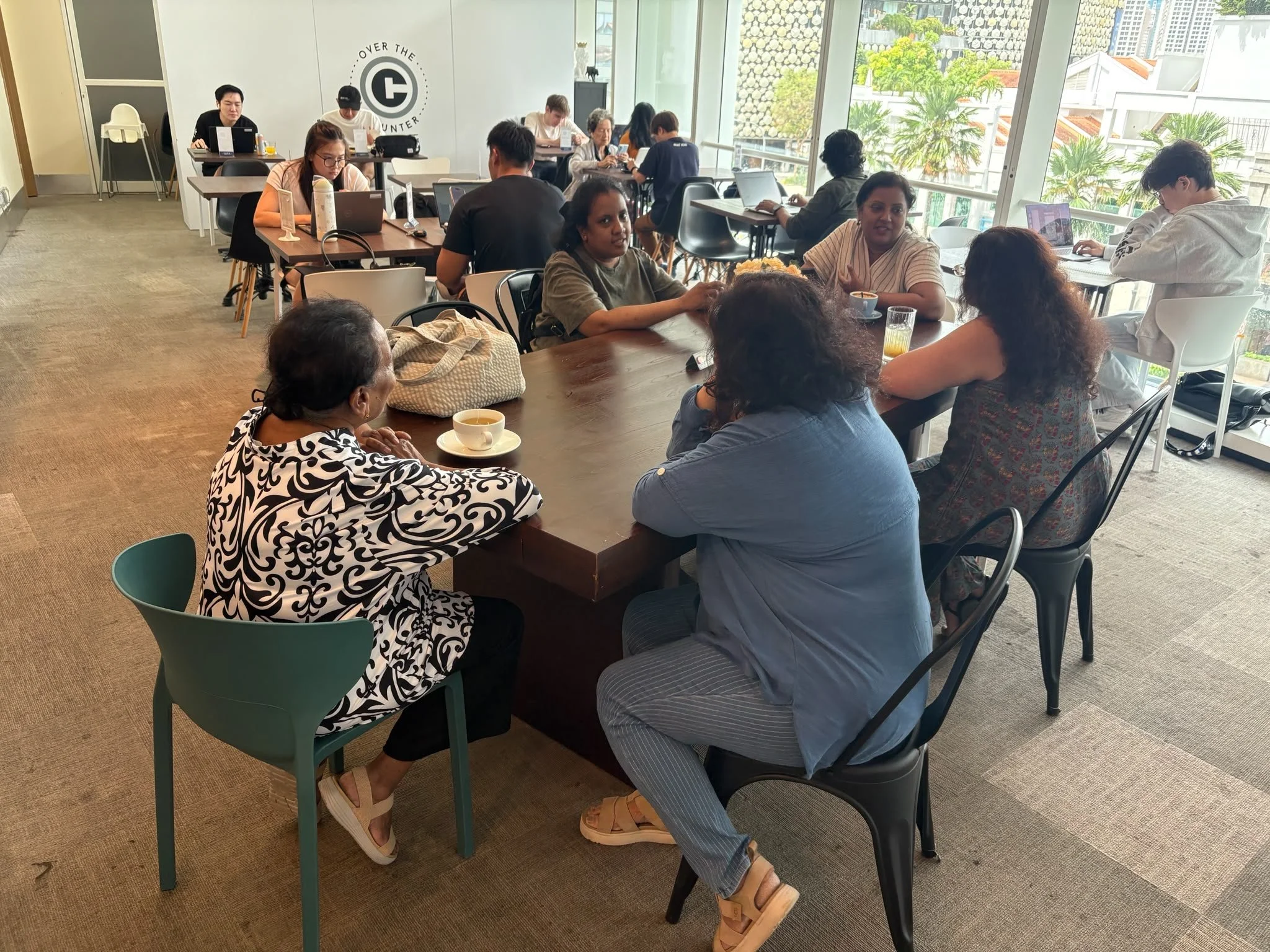
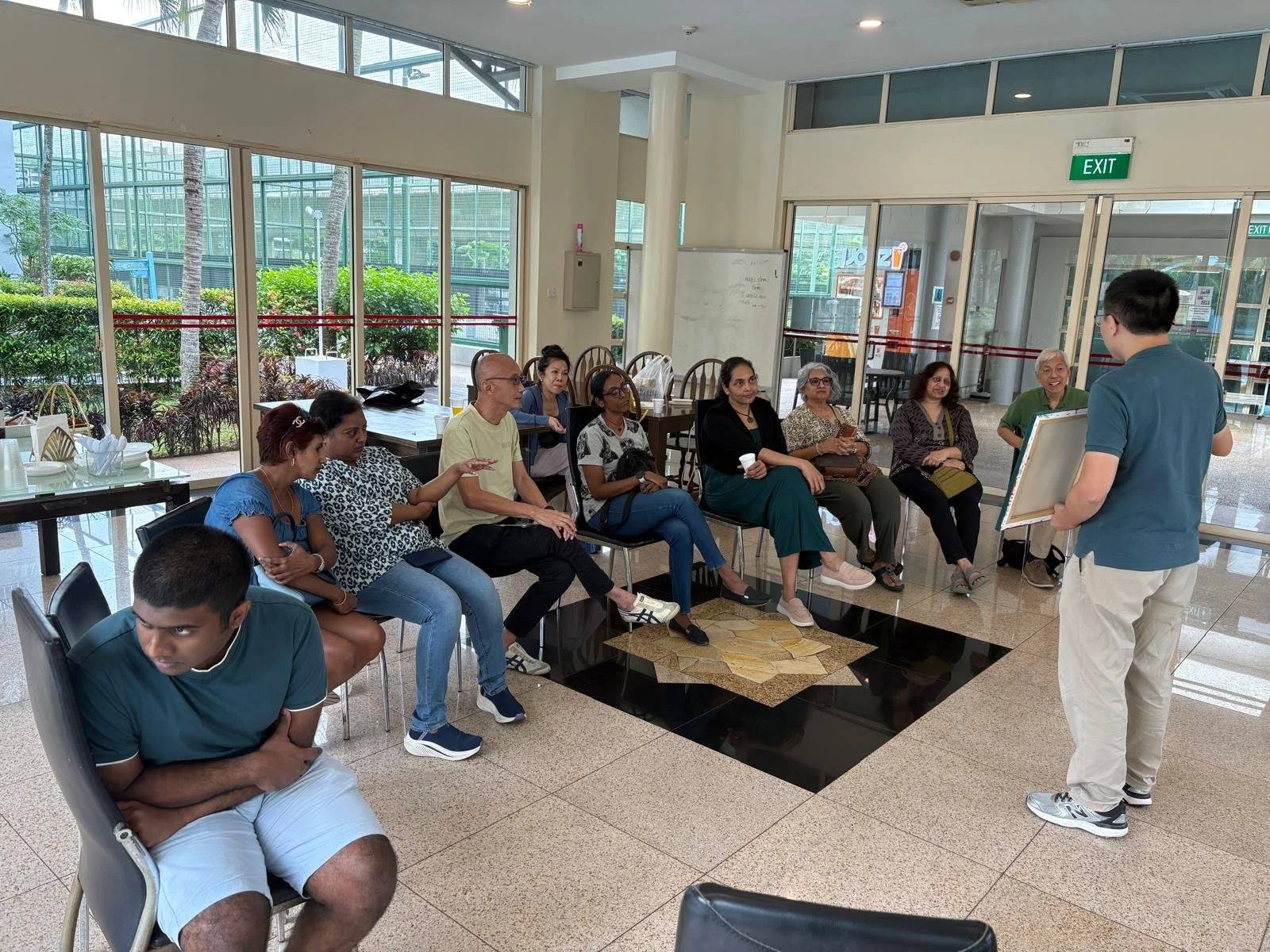
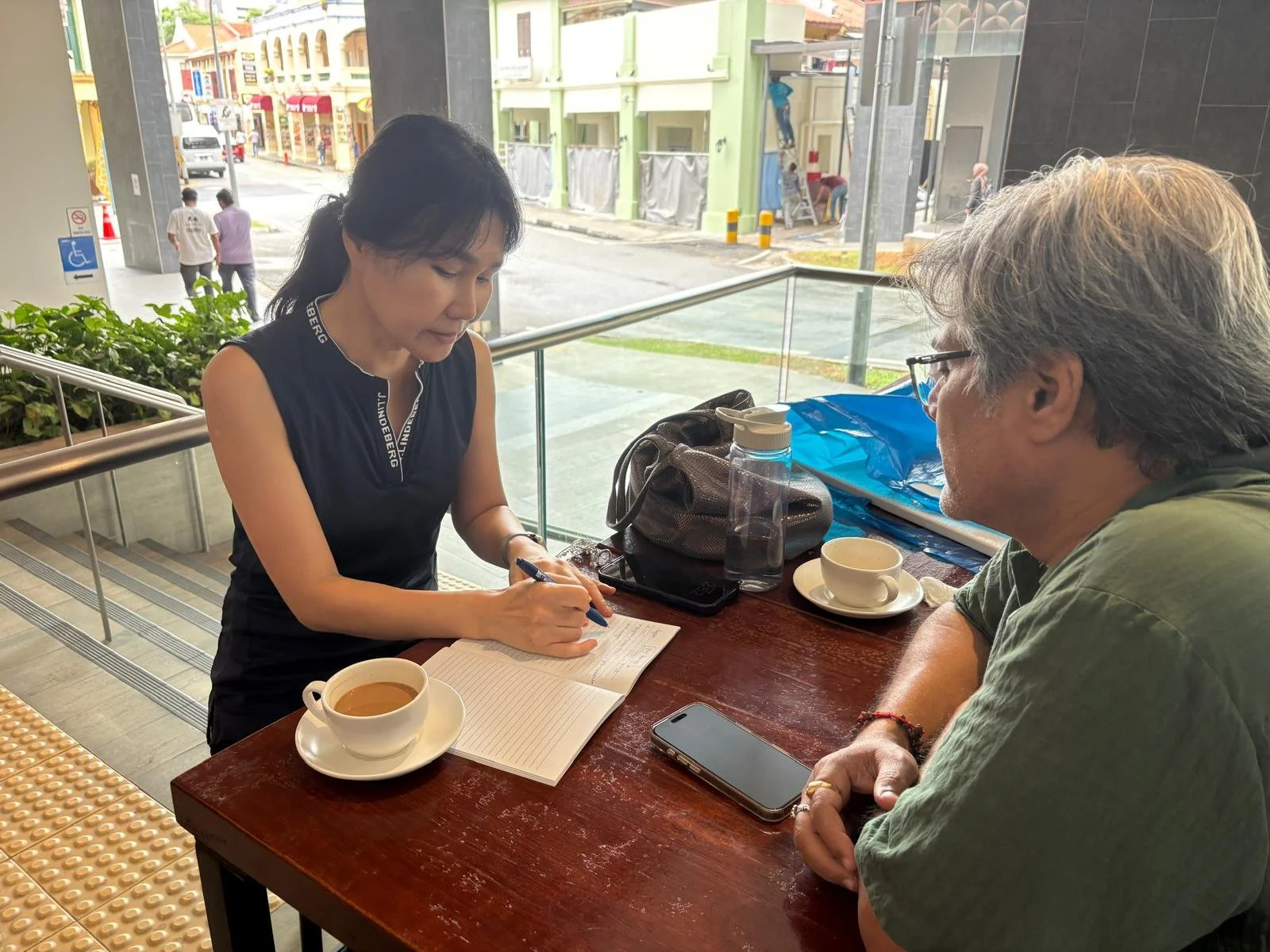
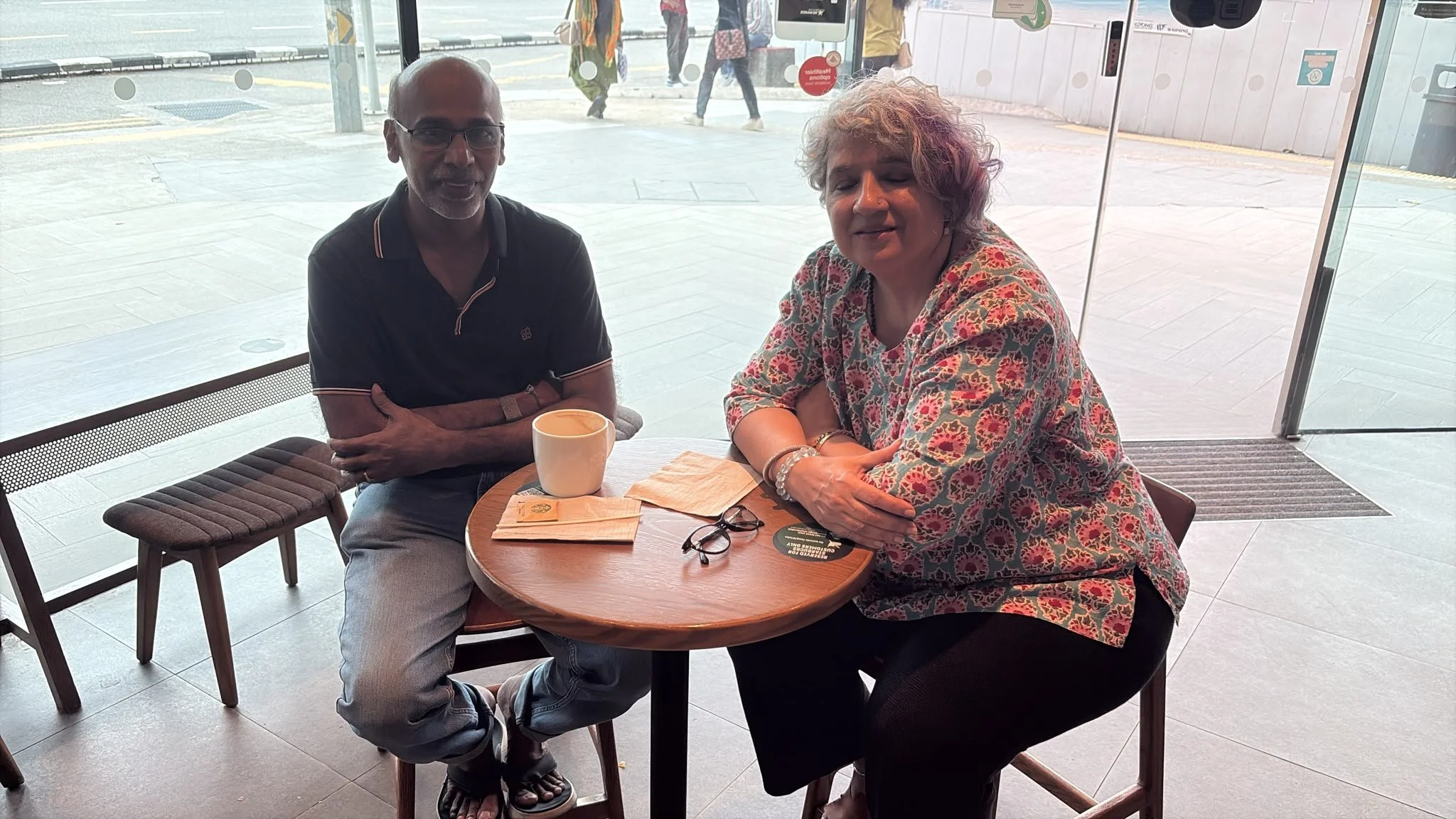
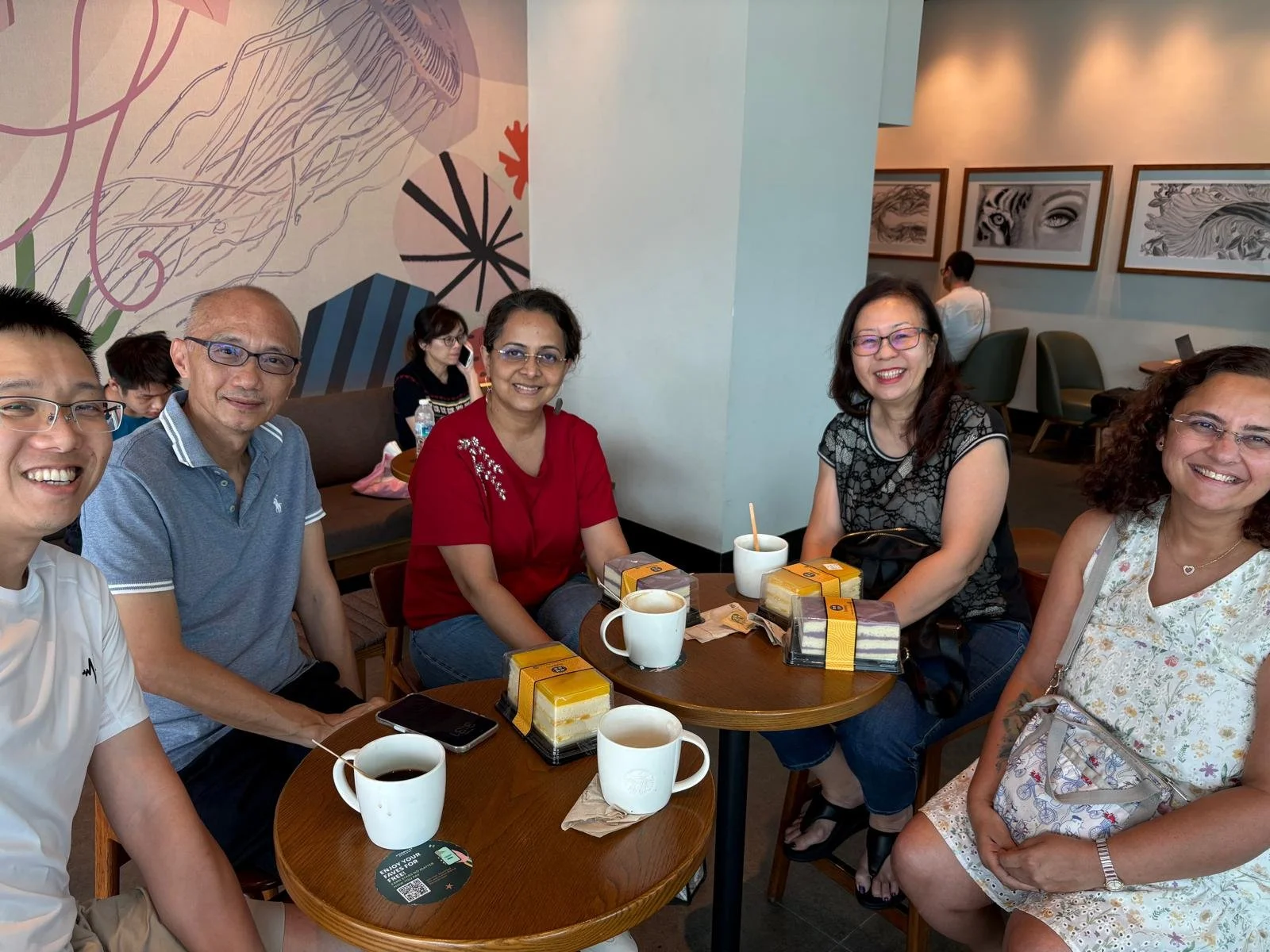
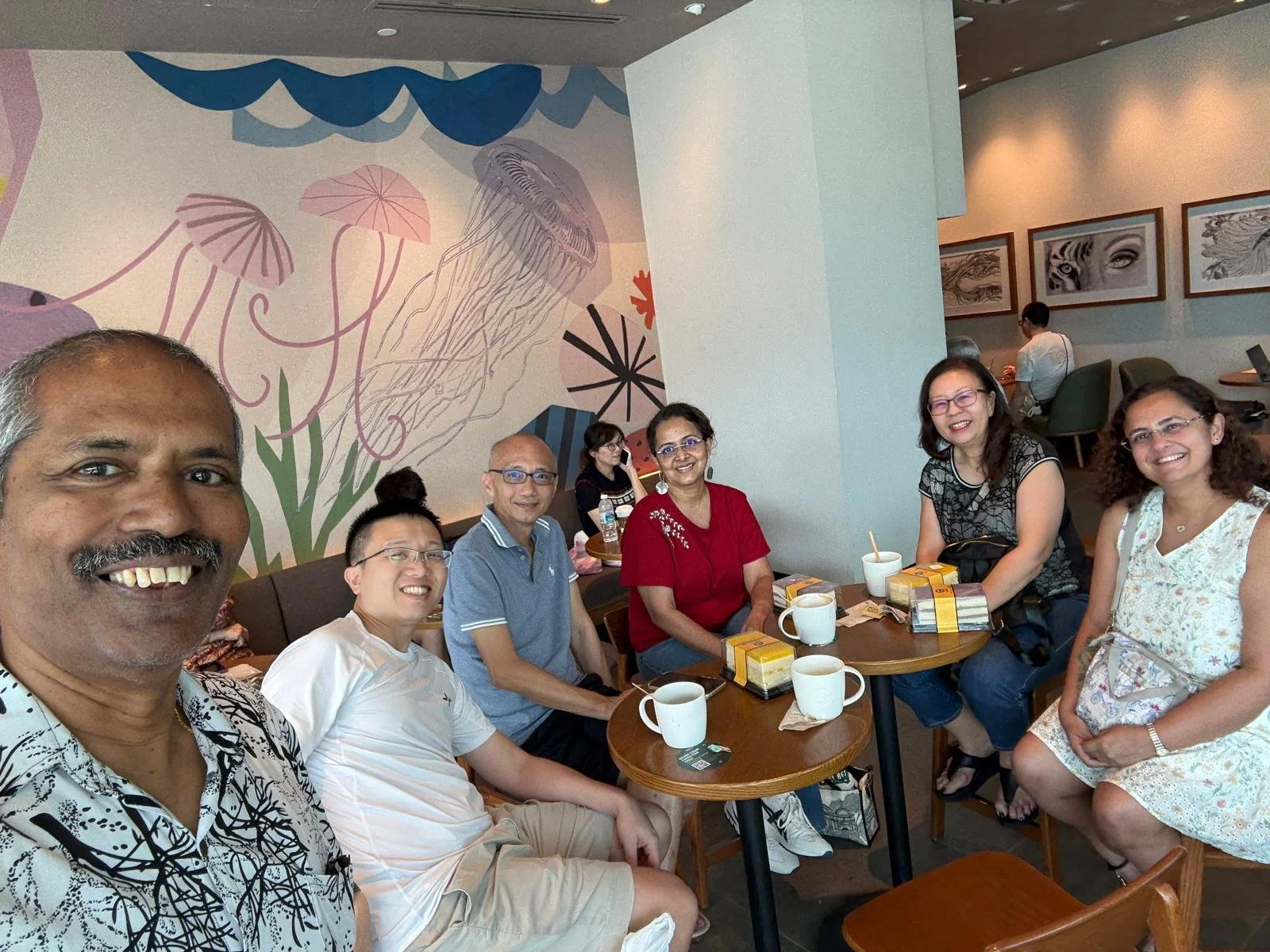
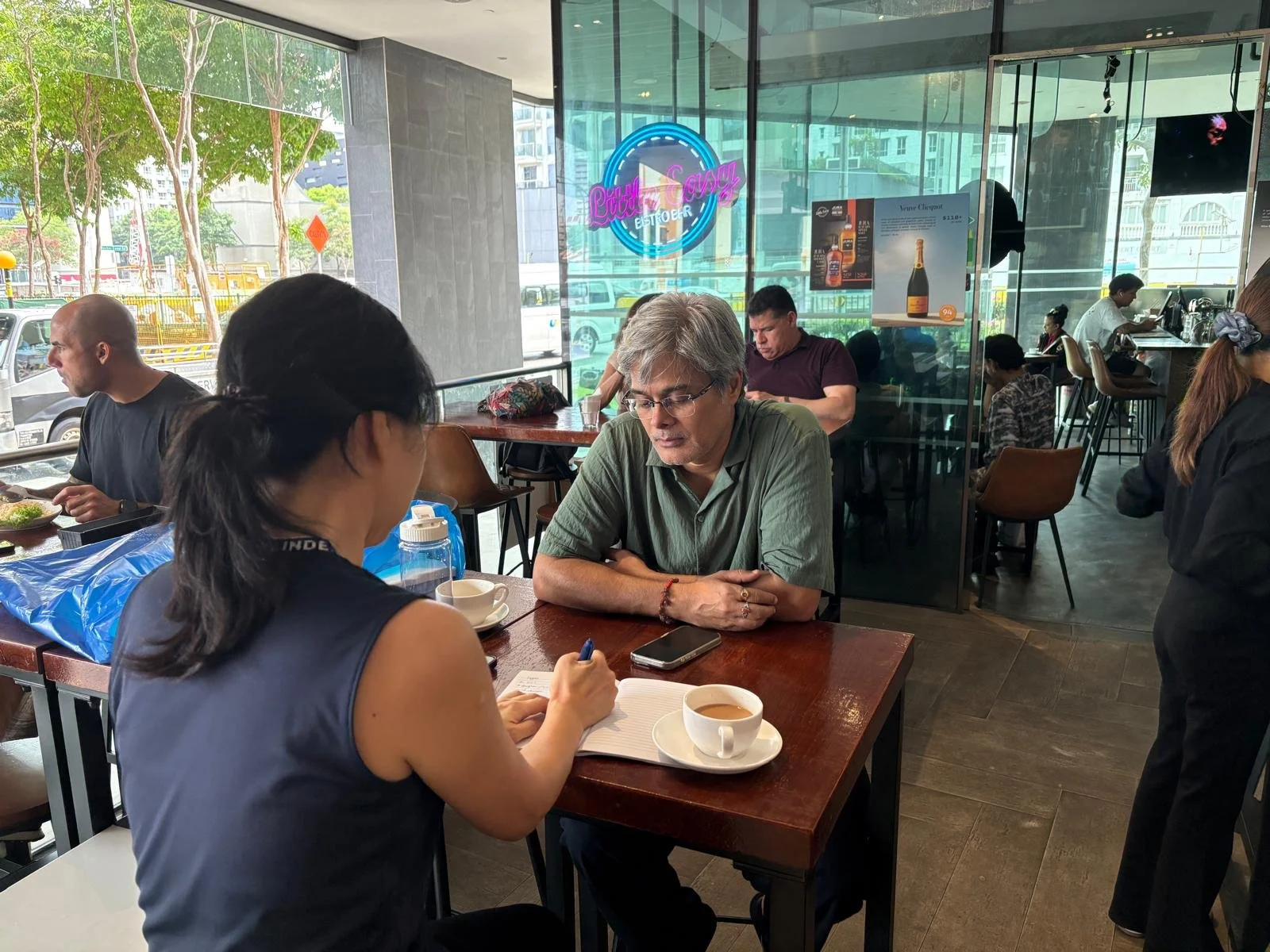
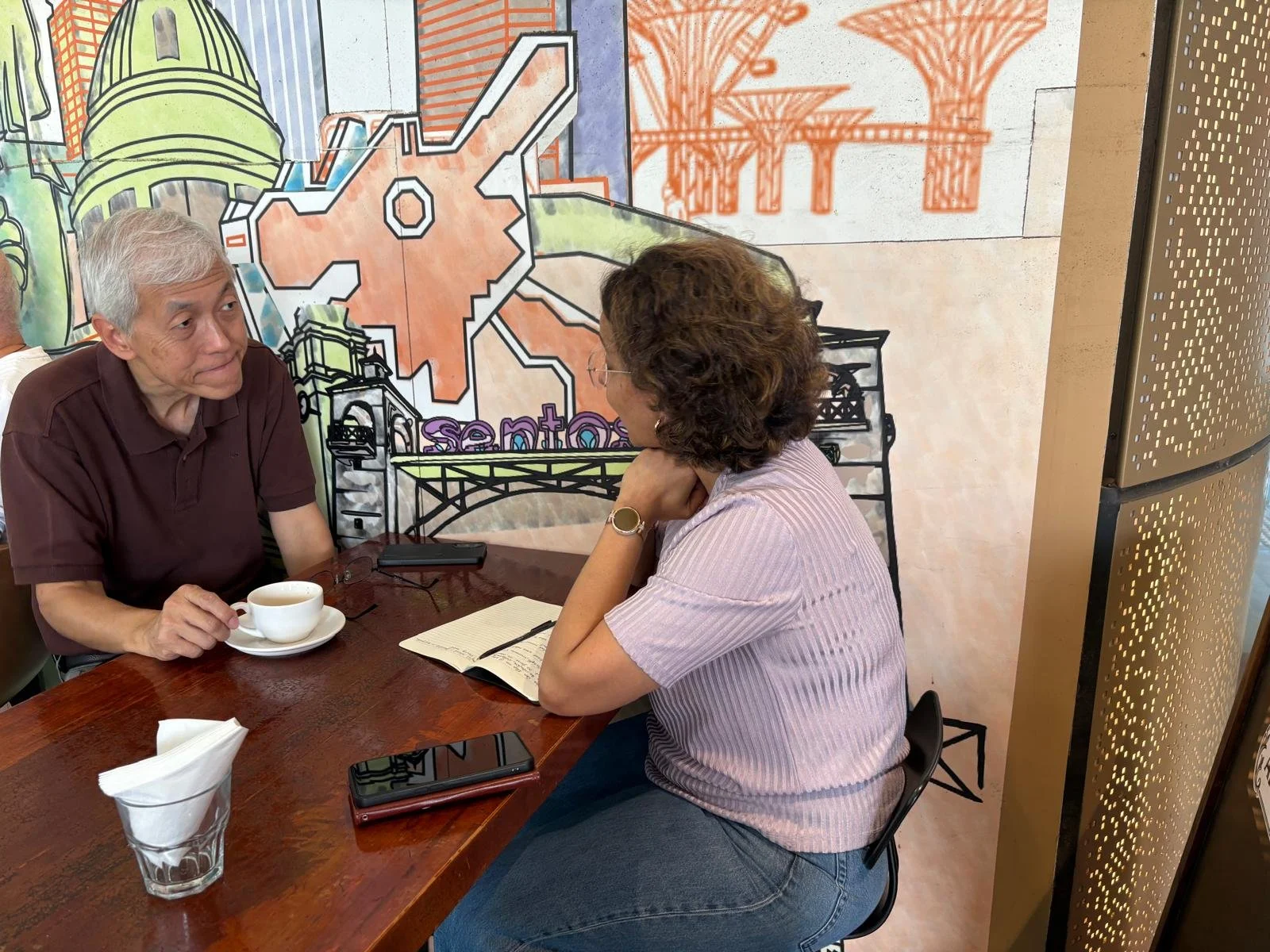
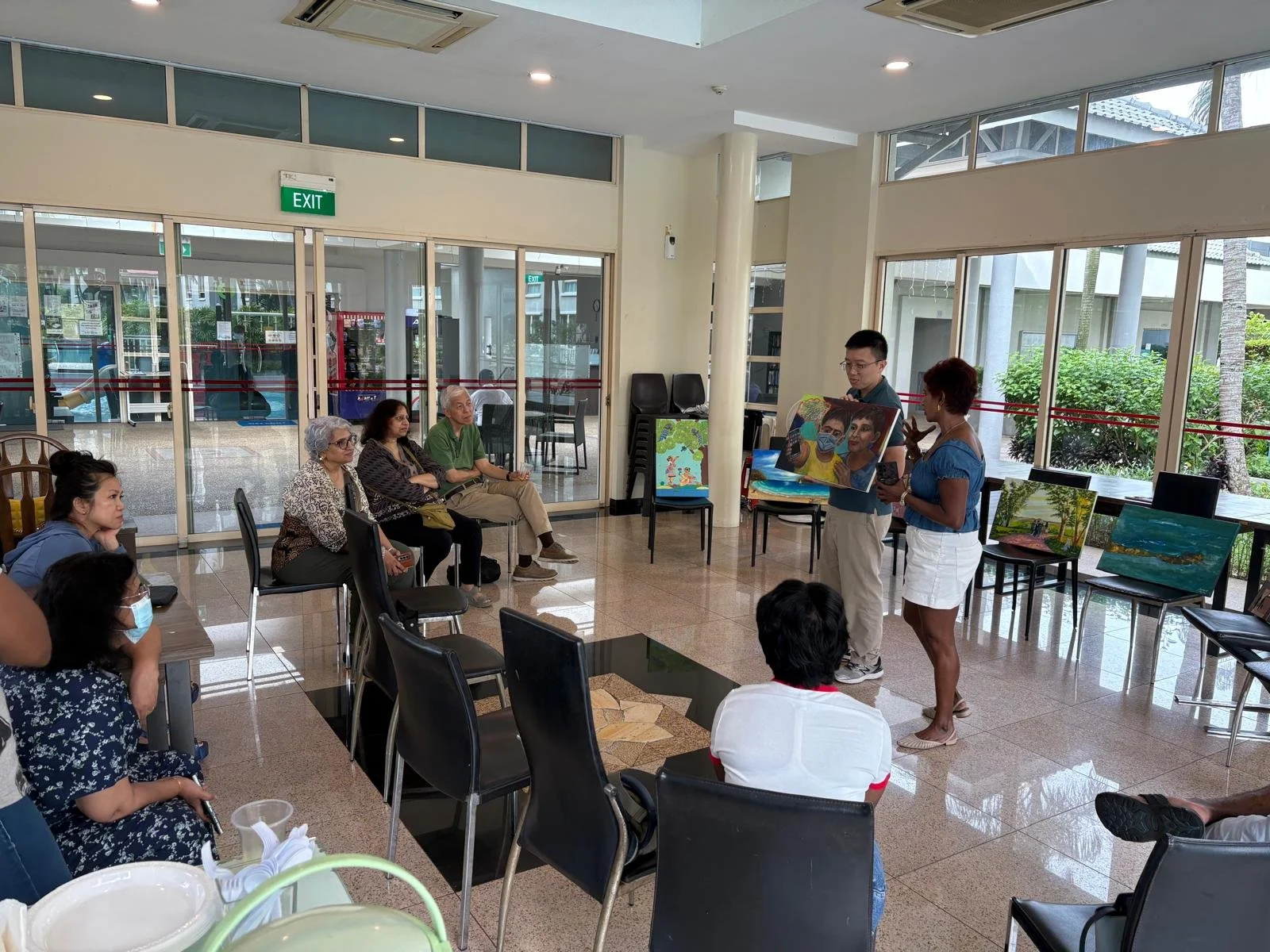
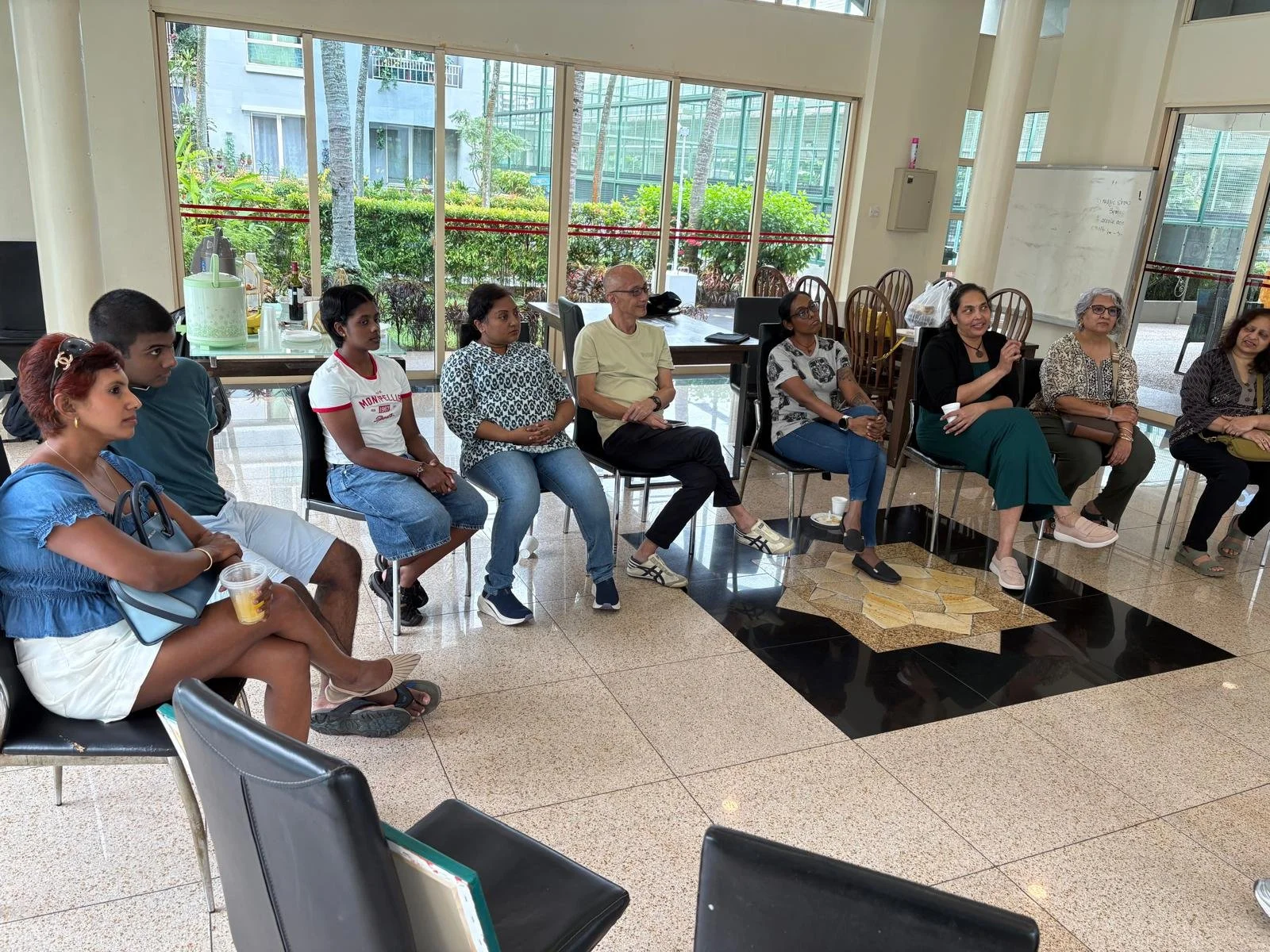
The ASIRVATHAM journey began with meaningful gatherings where caregivers and artists came together in a safe and heartfelt space. Through open conversations, caregivers shared deeply personal stories of love, sacrifice, challenges, and resilience in caring for loved ones with autism.
These interactions became powerful moments of connection, understanding, and empathy. As artists listened, they gained deeper insight into the emotional realities behind each caregiving journey. These shared experiences became the inspiration behind the artworks, transforming lived stories into meaningful visual expressions.
More than preparation for an exhibition, these gatherings built trust, fostered understanding, and created a shared purpose—to give voice to caregivers and inspire greater awareness, compassion, and inclusion in the community.
Moments that Inspired Change
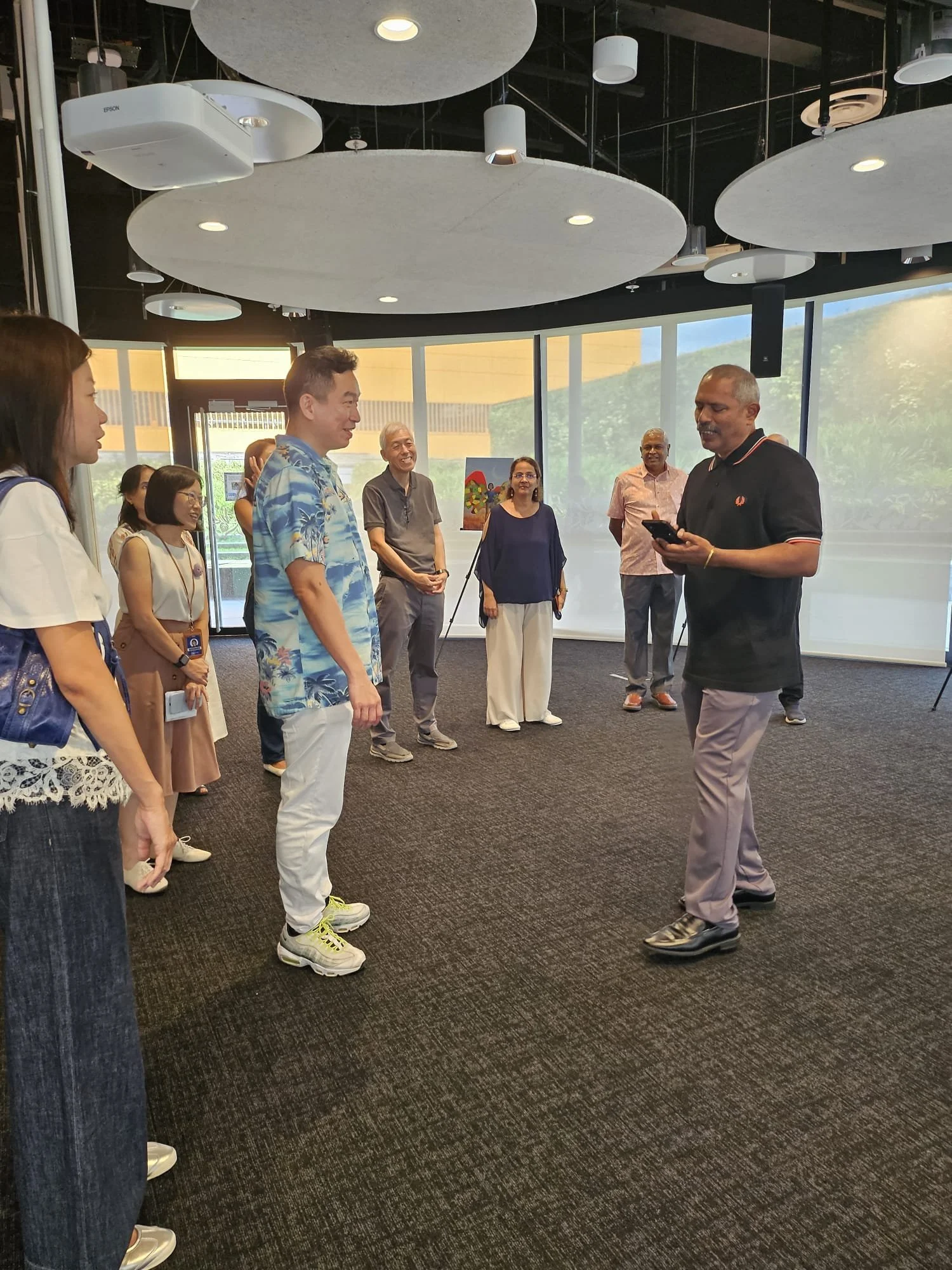
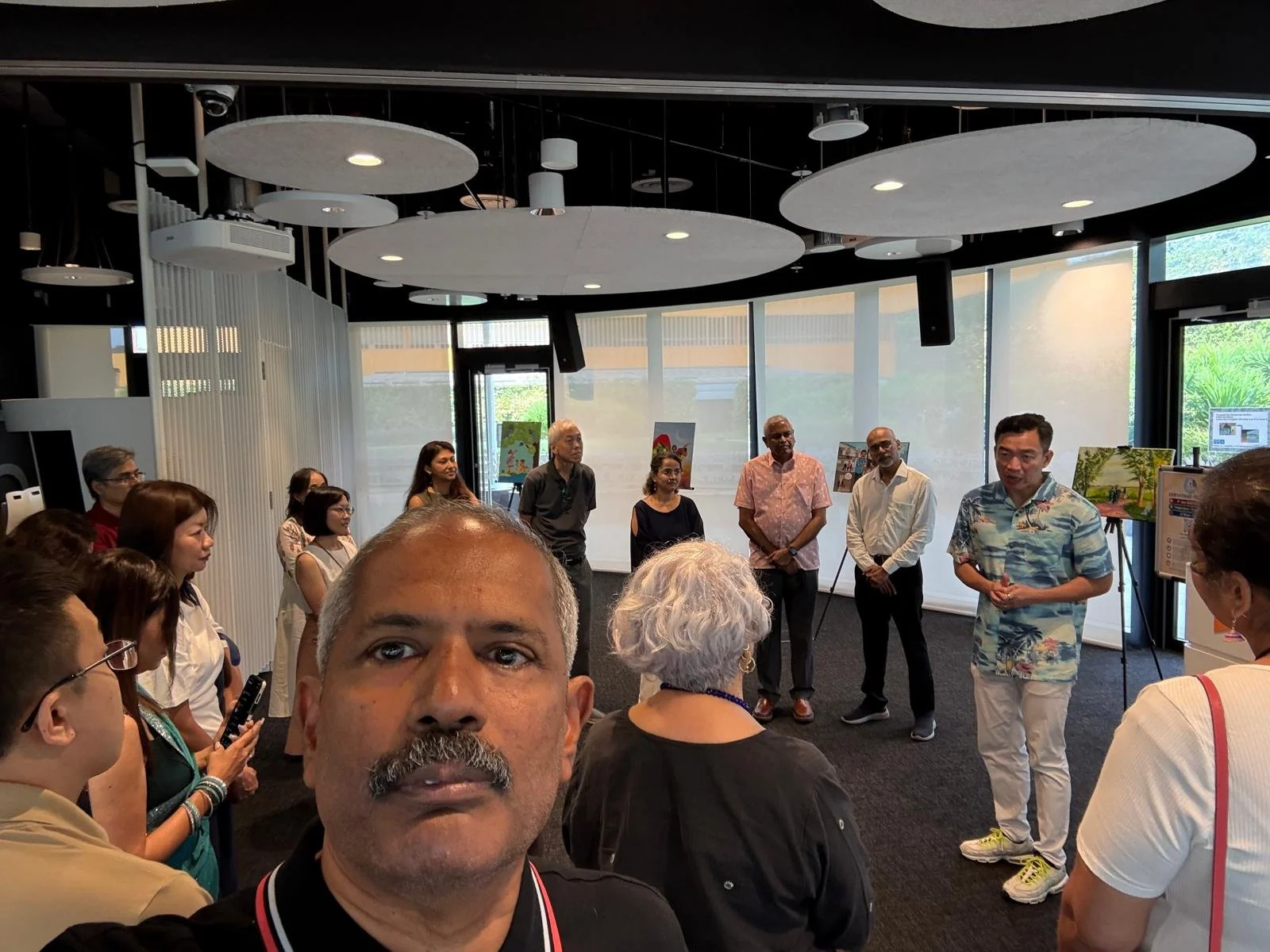
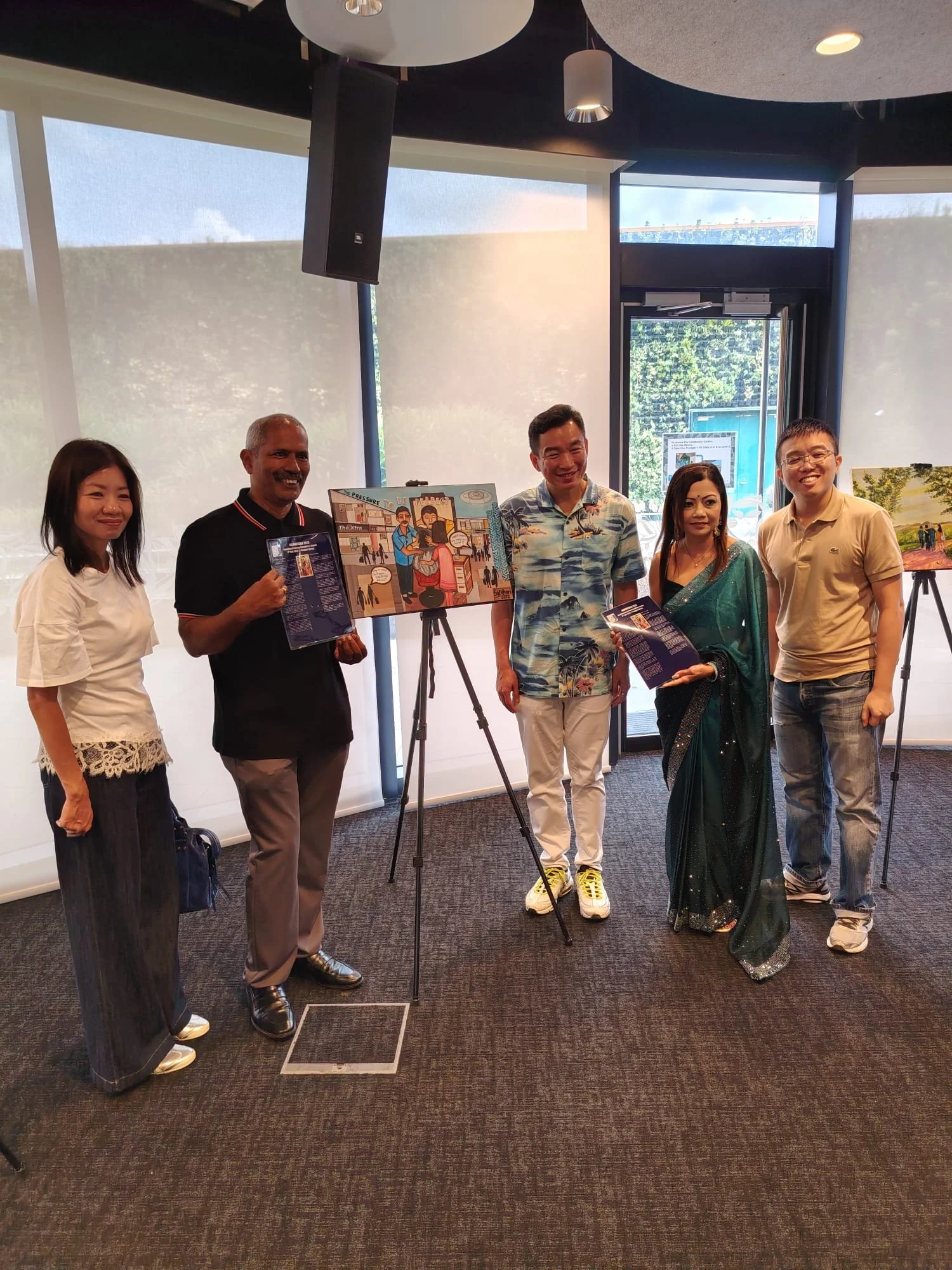
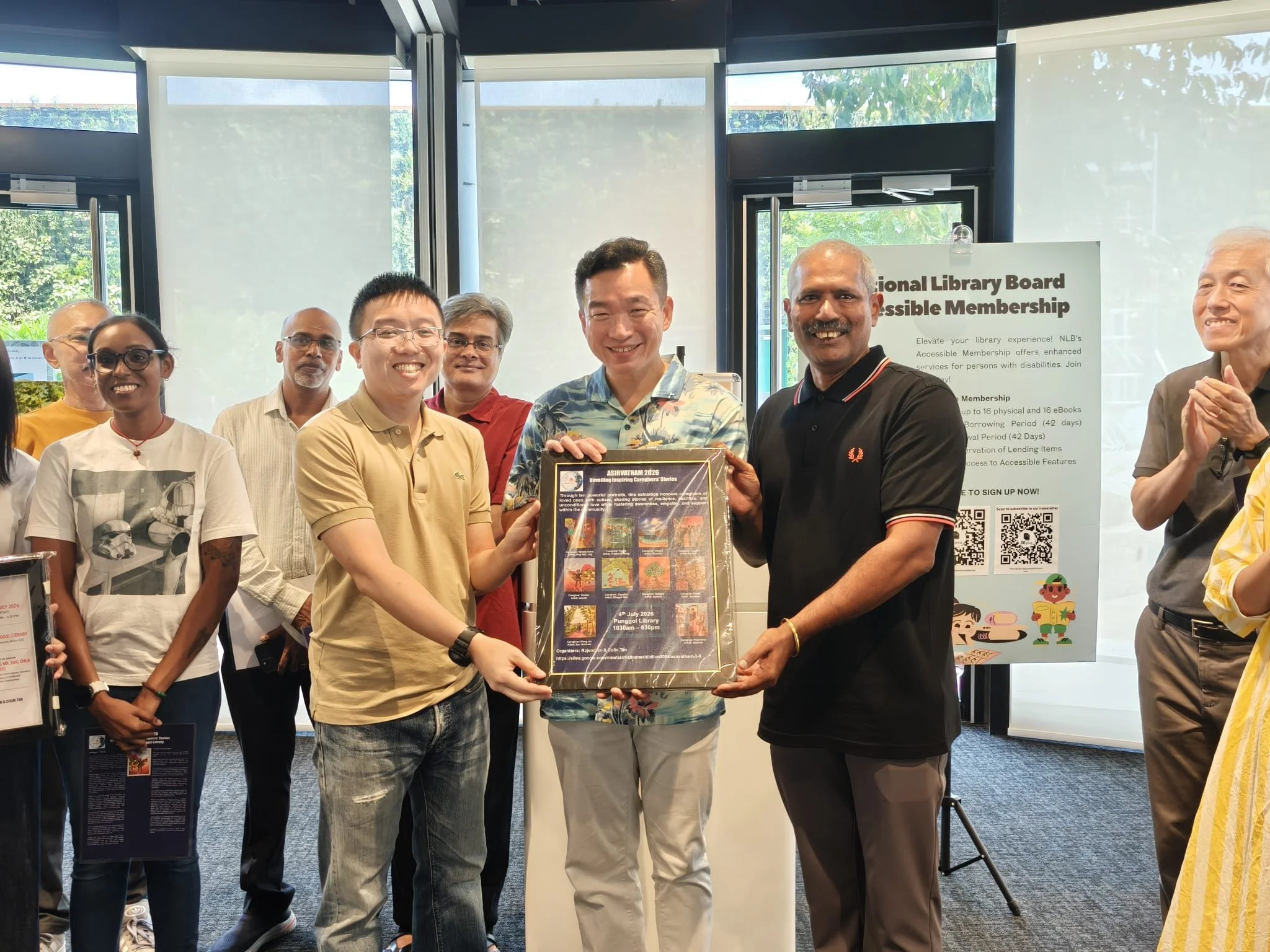
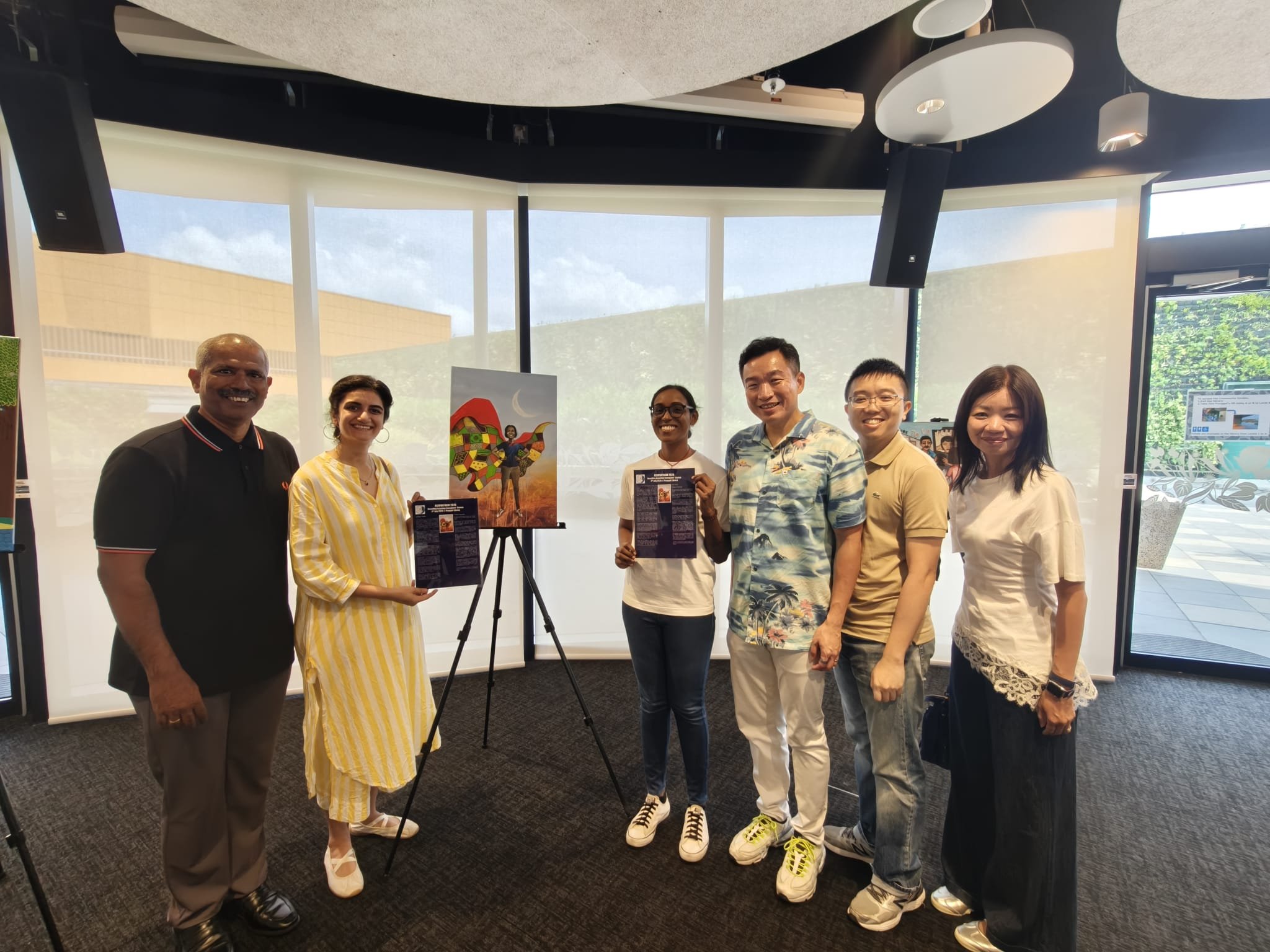
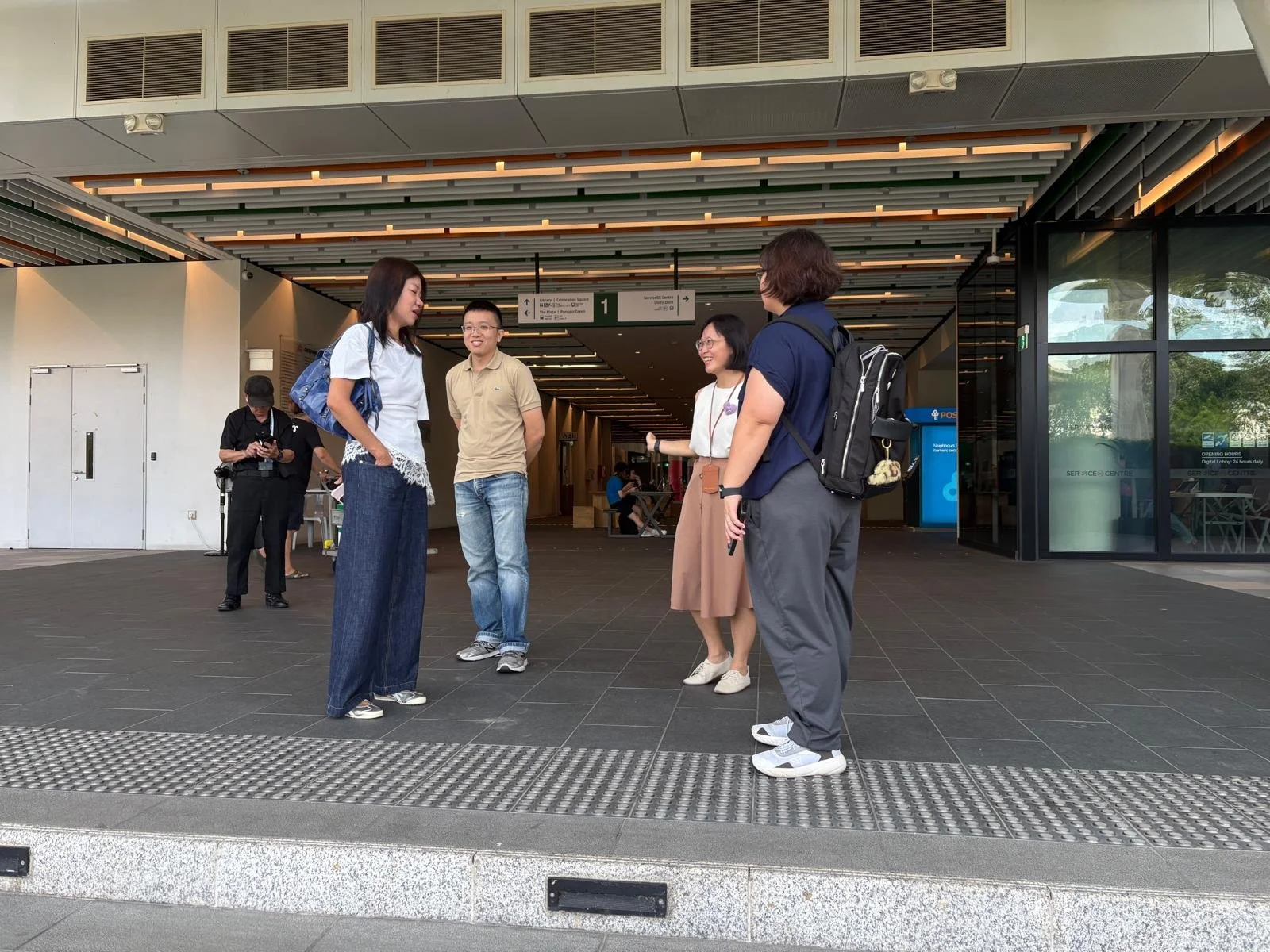
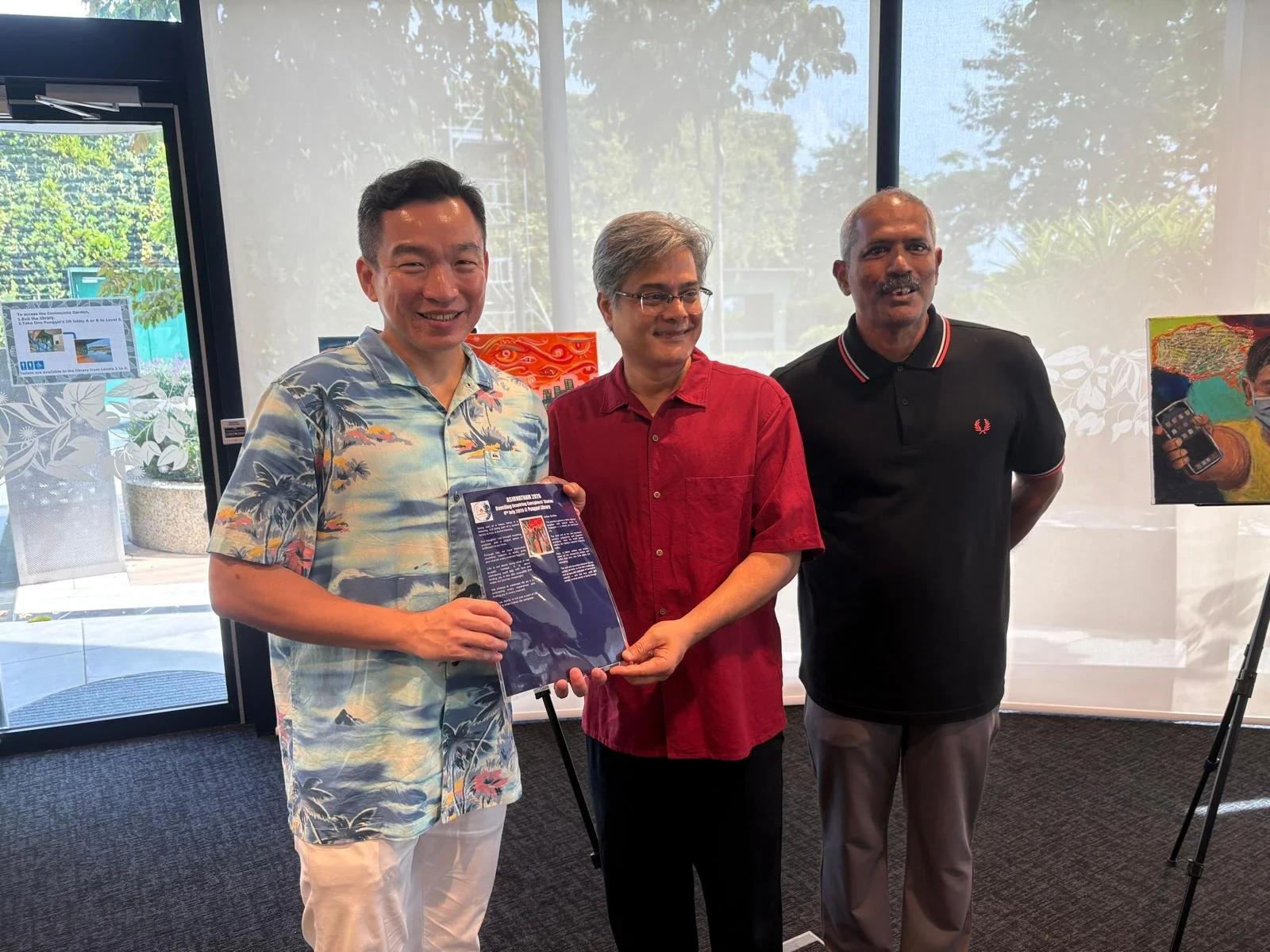
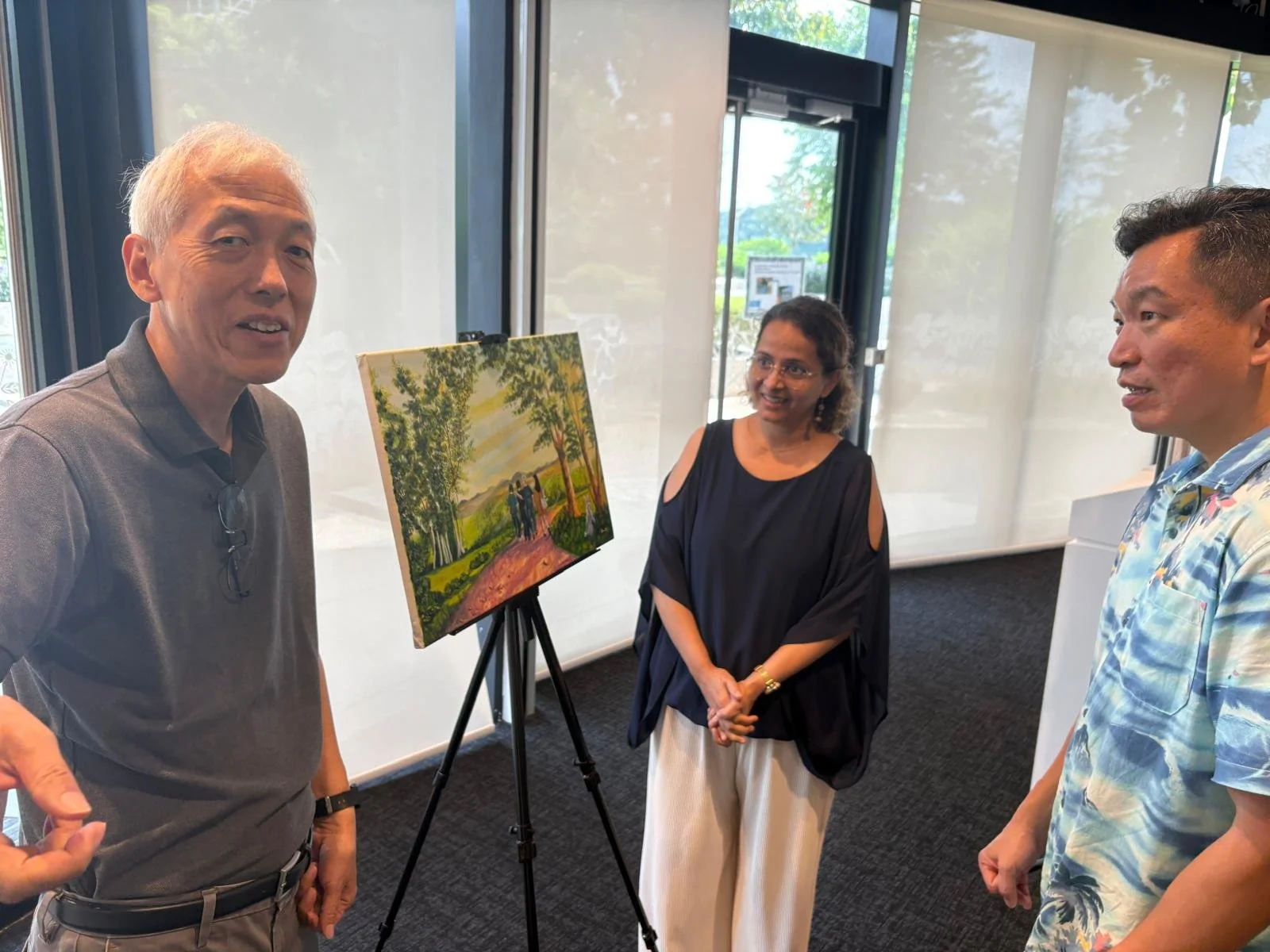
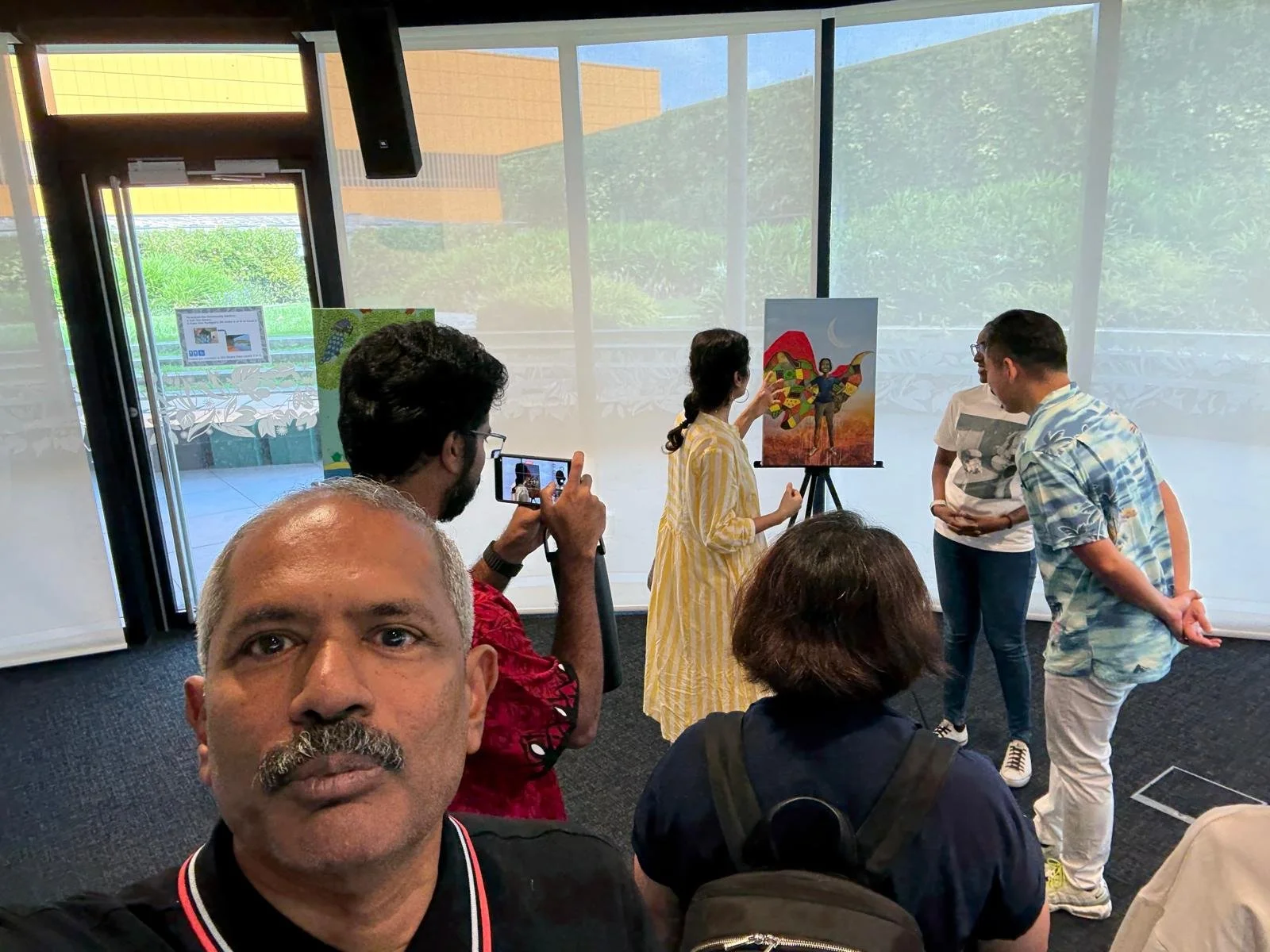
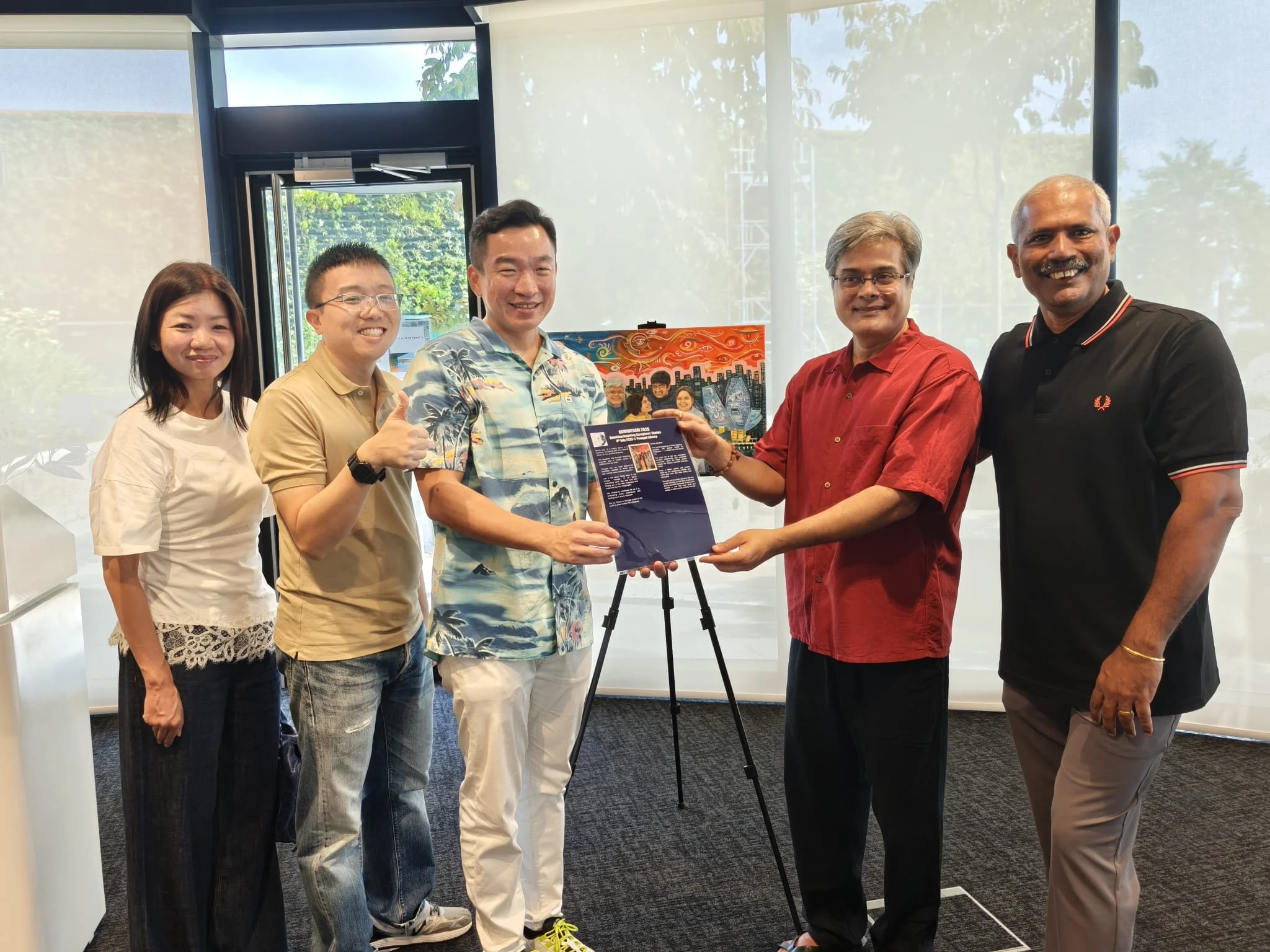
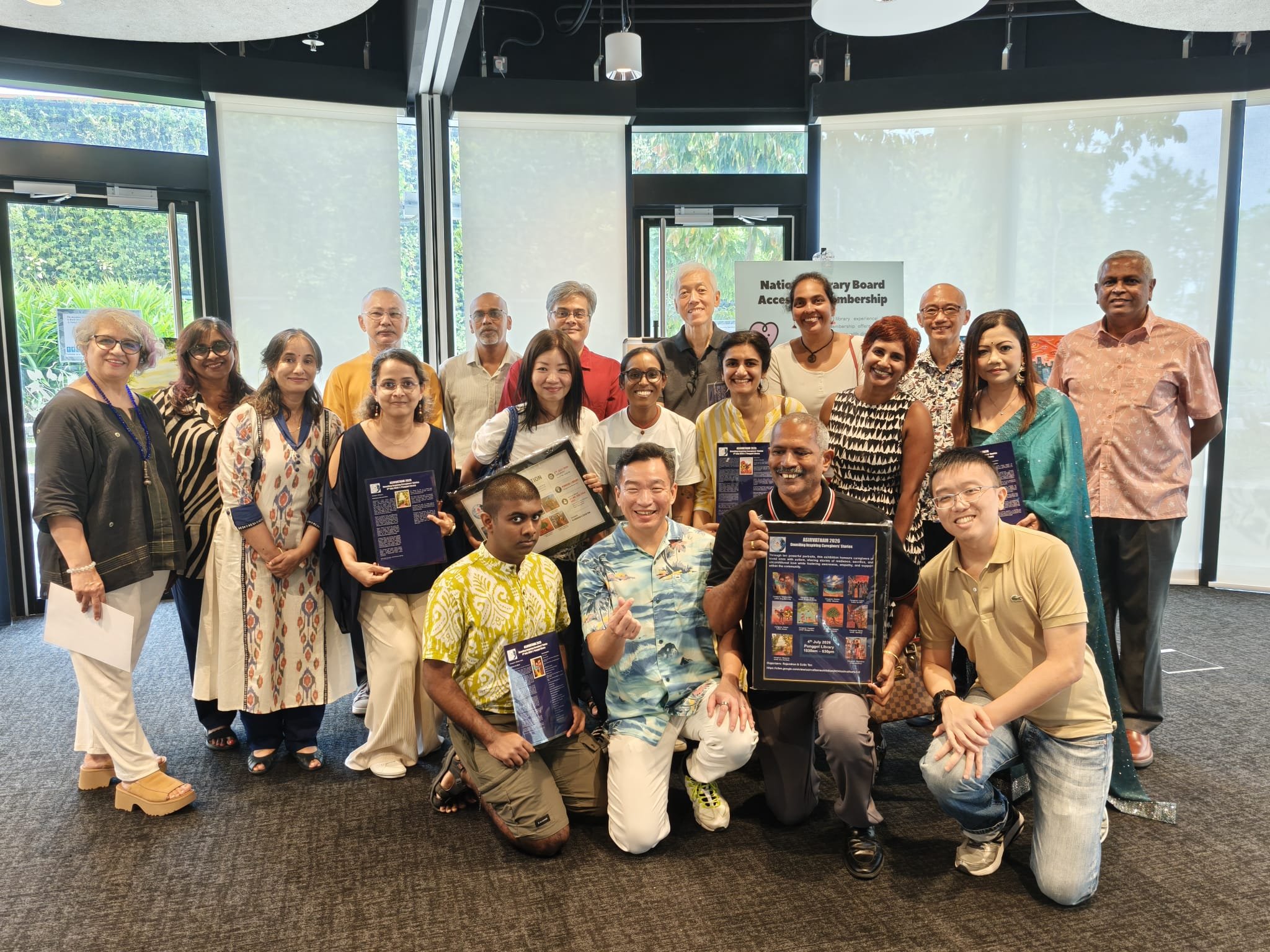
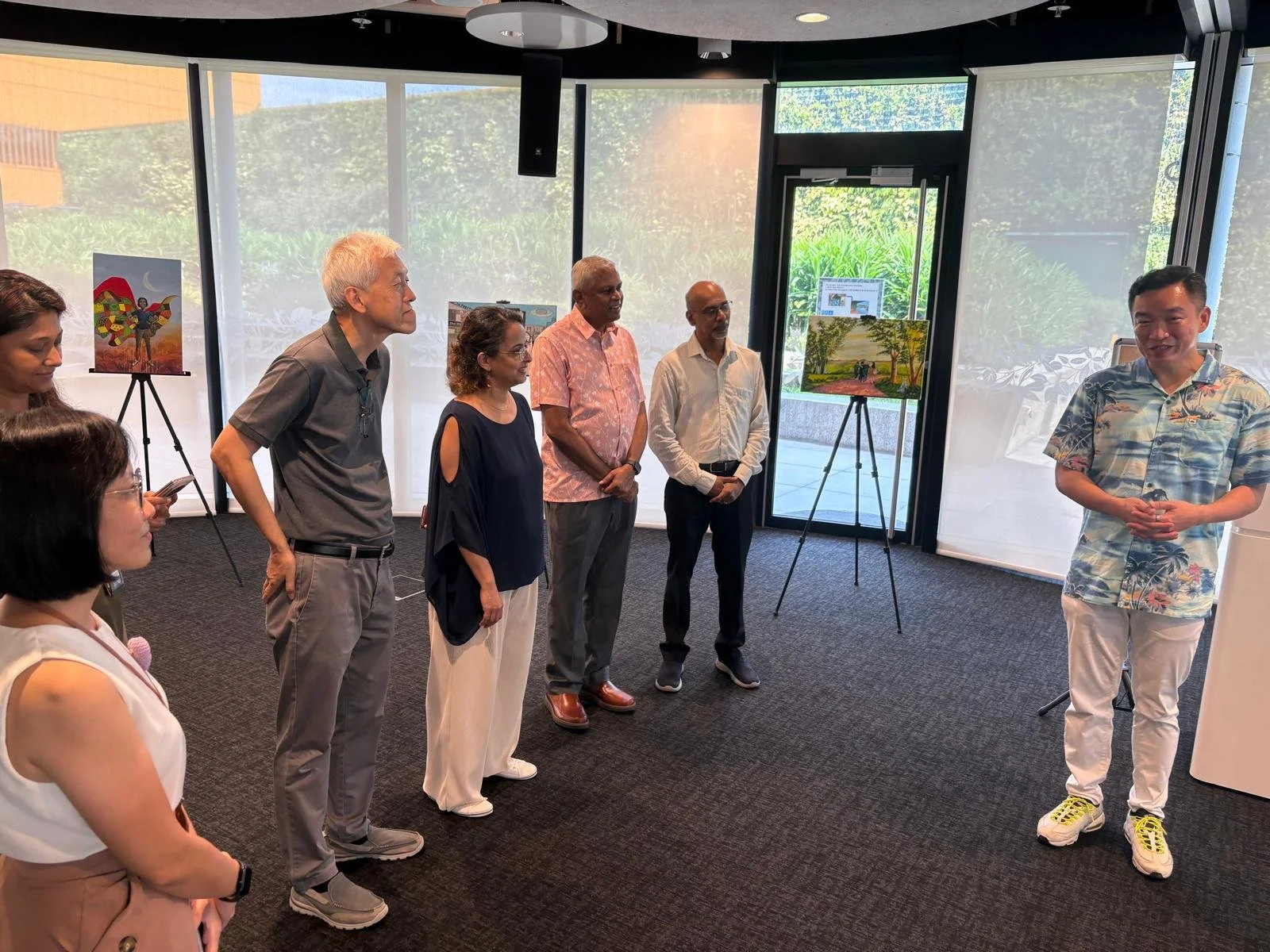
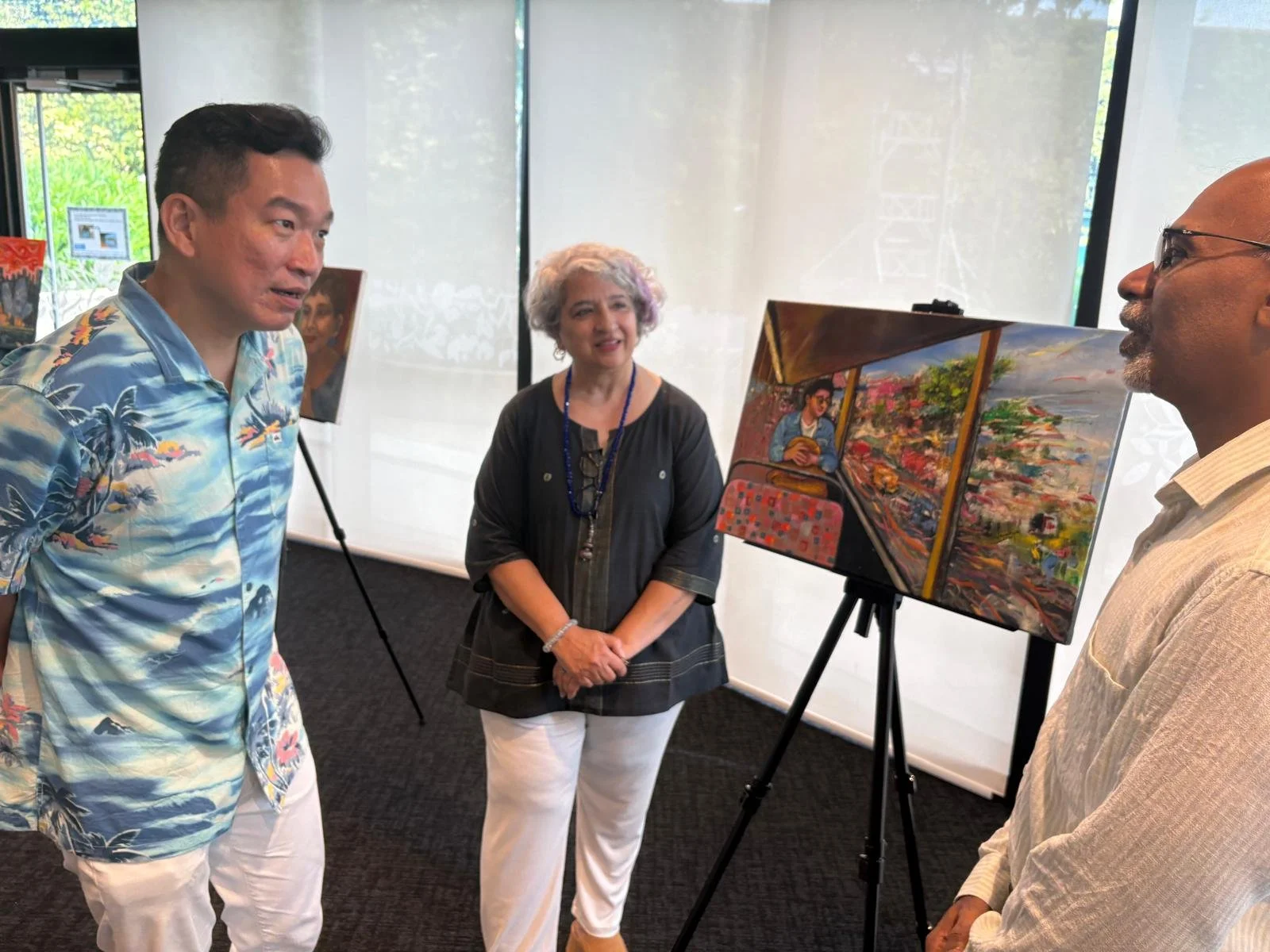
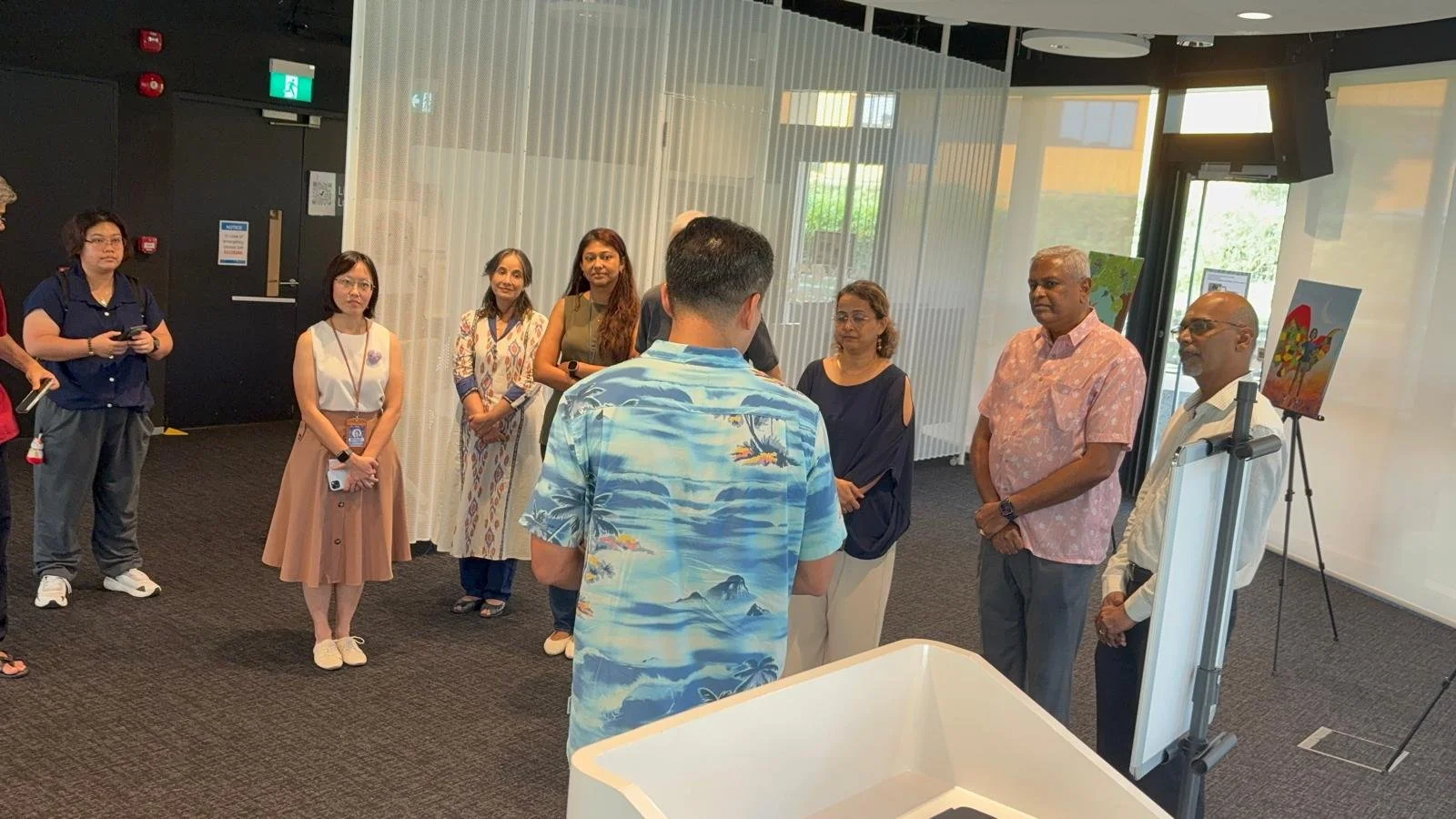
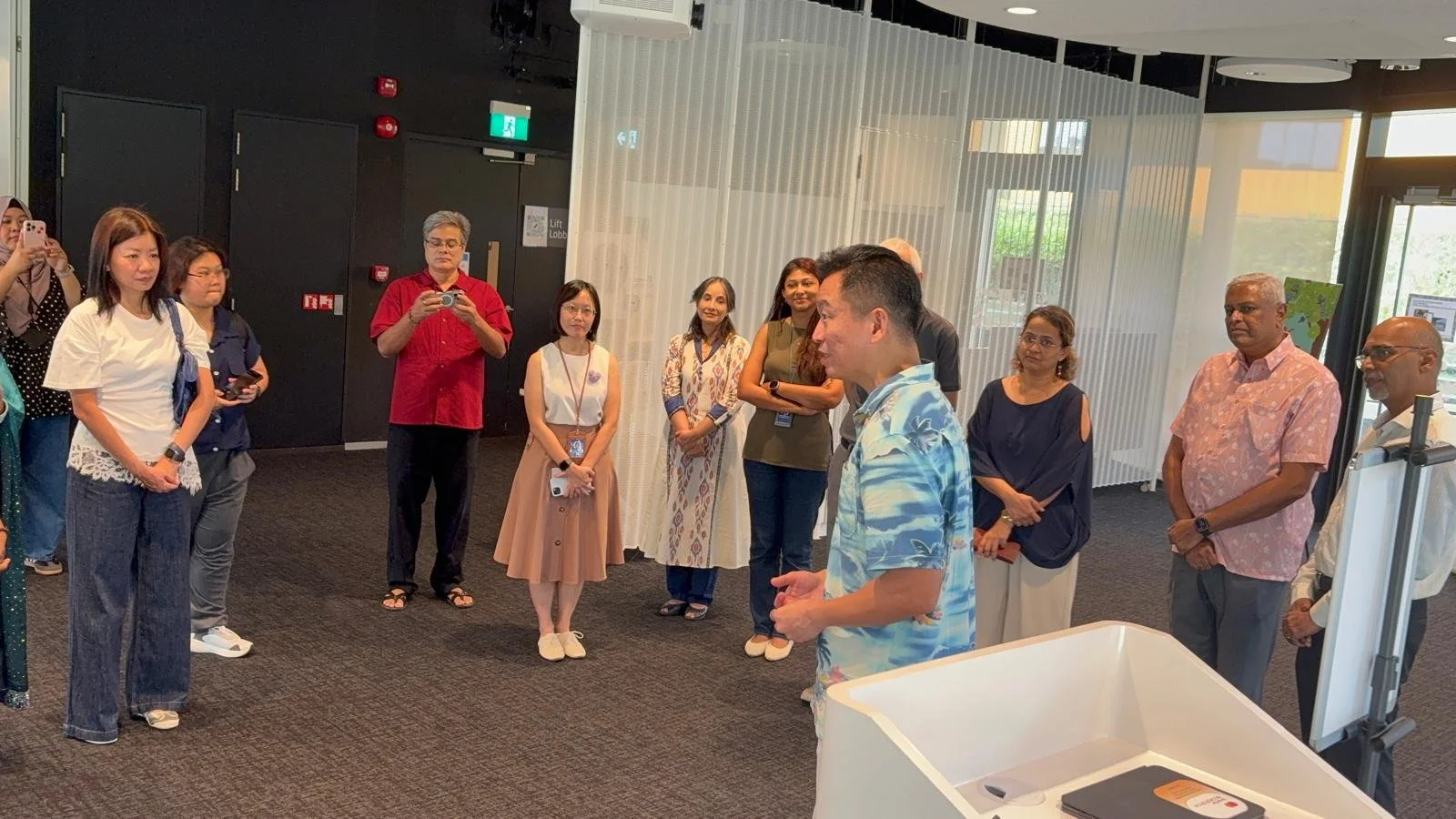
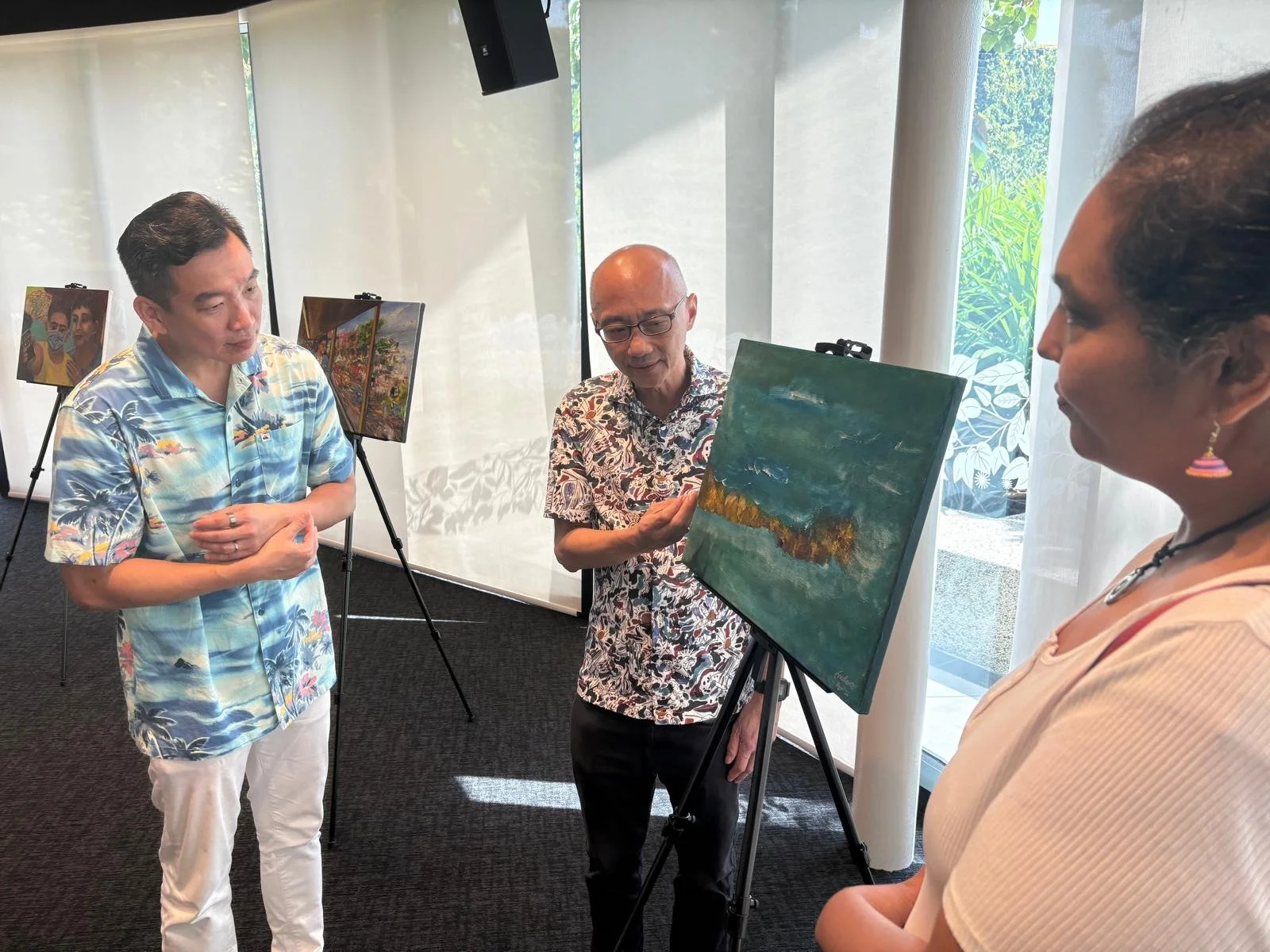
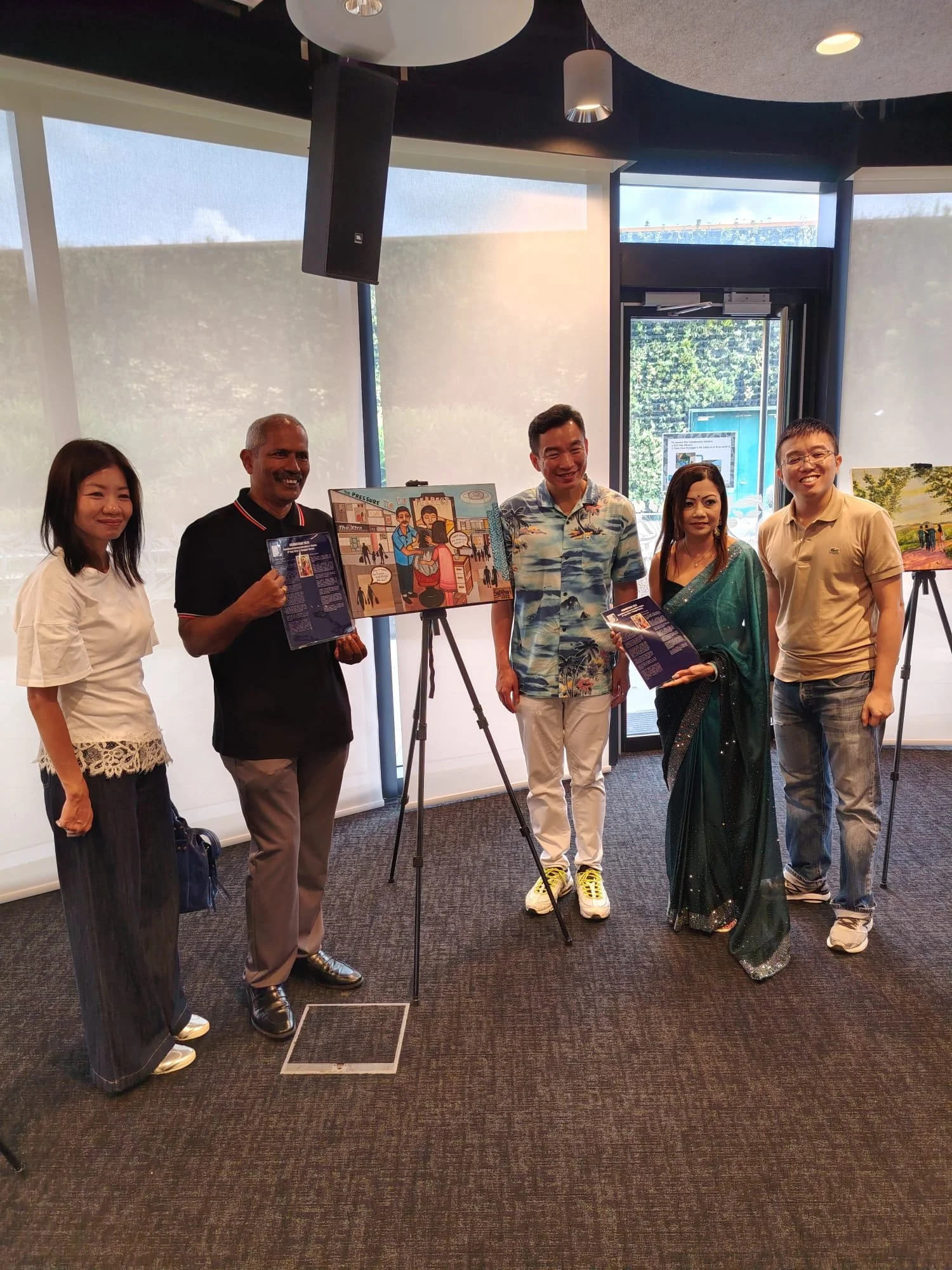
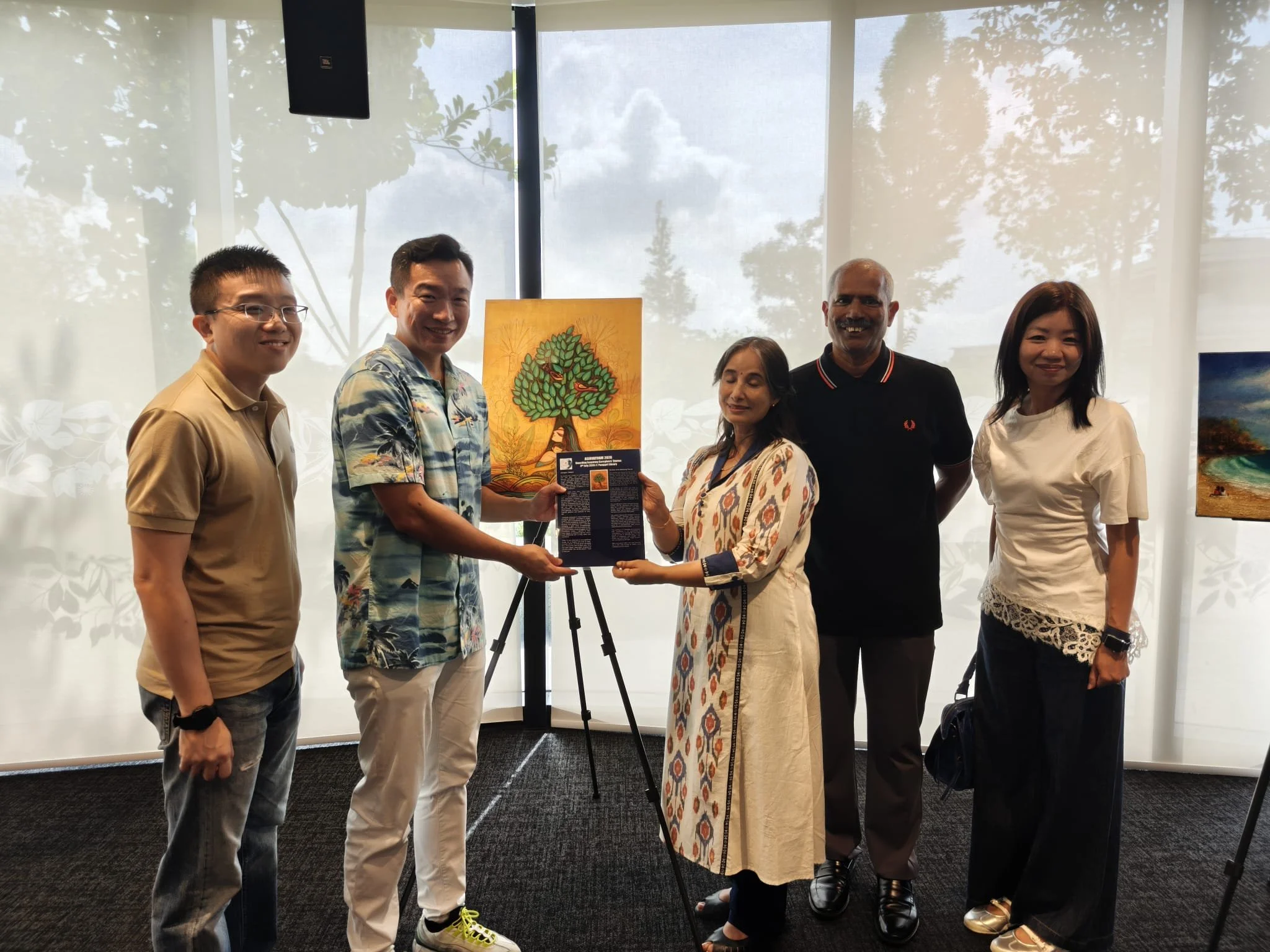
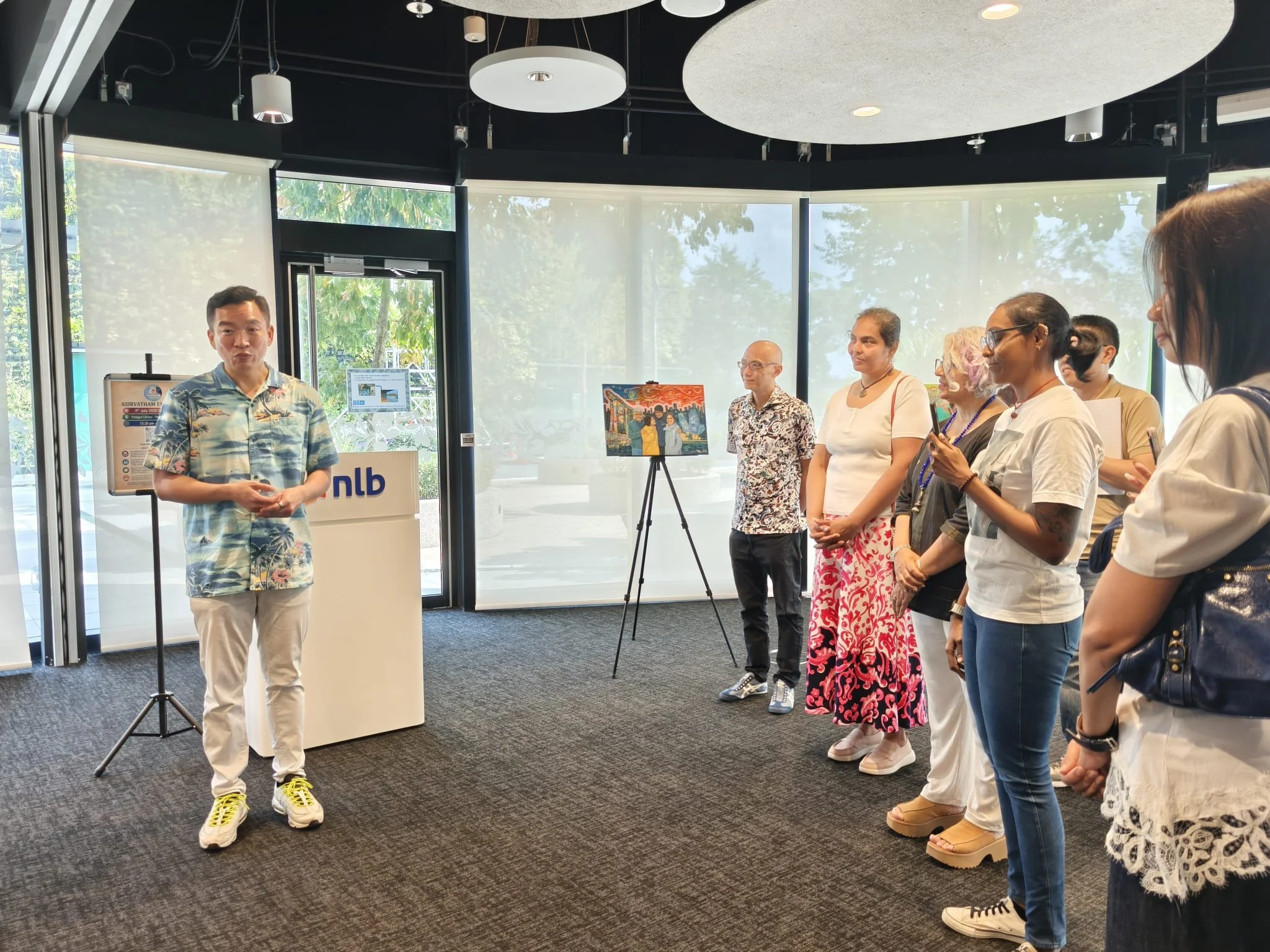
Every photo and video captured reflects the heart of ASIRVATHAM—moments of connection, courage, and shared understanding. From heartfelt conversations to meaningful interactions, these moments tell a powerful story of awareness, empathy, and inclusion.
Through these memories, the voices of caregivers, artists, and the community continue to inspire conversations and create lasting impact beyond the exhibition.